


What Makes Greek Food Mediterranean?
What makes Greek food Mediterranean is much more than the use of olive oil, tomatoes, vegetables and fresh fish. Greek cuisine belongs to the wider Mediterranean culinary world because of its ingredients, agricultural traditions, cooking methods, regional diversity and the cultural importance of sharing food. At the same time, it has developed a distinctive identity shaped by Greece’s geography, history, local products, religious calendar and everyday family life.
From vegetable dishes slowly cooked in olive oil to beans, lentils, seafood, fresh salads and meals prepared for family gatherings, Greek food reflects a long relationship between people, land and sea. Its familiar flavours are part of a broader Mediterranean tradition, but the particular combinations of ingredients, techniques and customs found in Greece give the country’s cuisine its own character.
To understand what makes Greek food Mediterranean, it is necessary to look beyond a list of typical dishes. Food traditions develop through daily habits as much as through recipes. What people grow, what they buy at local markets, how they preserve ingredients, when they eat certain foods and whom they invite to the table all contribute to the identity of a cuisine.
Greek food offers a particularly interesting example because the country combines a strong agricultural tradition with an extensive coastline, numerous islands, mountainous inland regions and considerable differences in climate. These conditions have influenced what is available locally and how ingredients are used. A coastal community with access to fresh fish may have different everyday habits from a mountainous village where livestock, cheese, wild greens and preserved foods have historically played a greater role.
Yet these differences exist within a recognisable culinary tradition. Olive oil, seasonal vegetables, legumes, herbs, bread, local cheeses and a variety of meat and seafood dishes appear in many different forms throughout Greece. The ingredients may be familiar across the Mediterranean, but the recipes, proportions and customs surrounding them are often distinctly Greek.
Greek Cuisine and the Mediterranean Food Tradition
The Mediterranean is not a single culinary culture with one standard set of recipes. It encompasses countries and communities across southern Europe, North Africa and the eastern Mediterranean, each with its own agricultural practices, religious influences, local ingredients and historical experiences.
Greek cuisine shares important characteristics with this wider region. Olive oil has a central place in many traditional dishes. Vegetables and legumes feature prominently in everyday cooking. Bread accompanies many meals, while fish, seafood, meat, dairy products and grains appear in different proportions depending on location, season, household preferences and occasion.
These similarities help explain what makes Greek food Mediterranean, but they do not mean that Greek cooking is identical to Italian, Spanish, Turkish, Lebanese or North African cuisine. Mediterranean food traditions overlap and influence one another, yet each has developed its own combinations of flavours, techniques and social customs.
Greek cuisine, for example, includes a wide range of vegetable dishes cooked with tomato and olive oil, bean soups, lentil dishes, pies made with regional greens and cheeses, grilled seafood, roasted meats and layered oven-baked meals. Many of these preparations reflect local ingredients and established household techniques rather than a single national formula.
The Greek table also has a social dimension. Meals may involve shared plates, bread placed within everyone’s reach, salads served alongside the main dish and food offered to visitors as a gesture of welcome. These practices connect Greek food with broader Mediterranean traditions of hospitality and communal eating, while retaining their own familiar expressions in Greek households.
Olive Oil: A Foundation of Greek Mediterranean Cooking
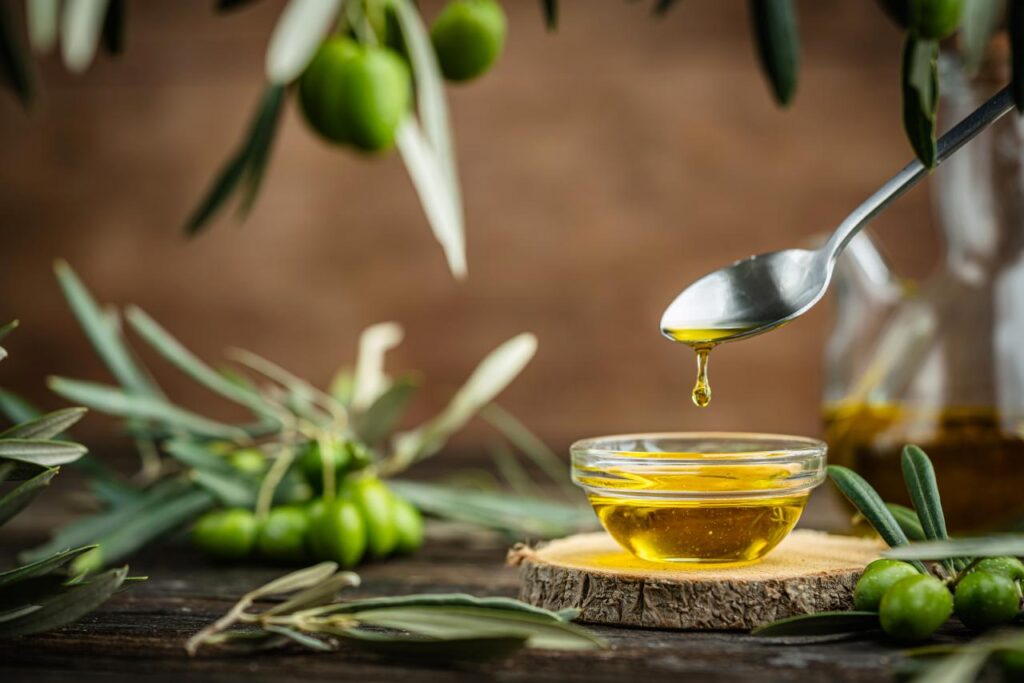
Olive oil is one of the most important ingredients in Greek cuisine and a major part of its Mediterranean identity.
It is used to dress salads, cook vegetables, prepare legumes, flavour sauces, roast food and finish many dishes. In numerous traditional recipes, olive oil is not simply a cooking medium added in small quantities. It contributes directly to the taste, texture and character of the finished meal.
A dish of green beans cooked with tomato and olive oil, for instance, depends on the relationship between the vegetables, the tomato, the cooking liquid and the oil. As the ingredients cook together, their flavours combine and the sauce develops a richer texture. Similar principles appear in many Greek vegetable and legume preparations.
Olive oil also connects food with the Greek landscape. Olive trees grow in many parts of the country, from mainland agricultural areas to islands and coastal regions. Local varieties, growing conditions, harvesting practices and production methods contribute to differences in the oils available from one place to another.
Understanding what makes Greek food Mediterranean therefore includes understanding how a fundamental agricultural product becomes part of everyday cooking, local identity and long-established food habits.
Olive oil alone, however, does not define the entire cuisine. Greek cooking also relies on ingredients such as lemon, vinegar, herbs, garlic, onions, grains, legumes, dairy products and a wide variety of seasonal produce. Its character emerges from the way these ingredients work together.
Vegetables, Legumes and Seasonal Ingredients
Vegetables and legumes are essential to many traditional Greek meals. Depending on the recipe, they may serve as a side dish, form the centre of the meal or become a substantial preparation in their own right.
Beans, lentils and chickpeas have long been useful ingredients because they are versatile, nourishing and suitable for storage. They can be turned into soups, baked dishes, salads and slow-cooked meals. Seasonal vegetables are prepared in similarly varied ways, including roasting, grilling, frying, boiling and cooking slowly with olive oil.
Greek cuisine includes dishes made with green beans, okra, peas, eggplant, zucchini, artichokes, leafy greens and many other vegetables. The precise selection changes according to the region, the season and what households can obtain locally.
Seasonality helps explain the connection between Greek cooking and the wider Mediterranean food tradition. Historically, households often relied on ingredients available at particular times of the year, while preserving methods such as drying, salting, pickling and storing certain foods helped extend their usefulness beyond the harvest.
Today, refrigeration, supermarkets, imports and modern transport have changed how people shop and cook. Nevertheless, seasonal ingredients remain important in Greek food culture, especially in households and regions where local produce continues to influence everyday meals.
When considering what makes Greek food Mediterranean, it is therefore useful to look at the role of vegetables and legumes rather than focusing exclusively on meat dishes, grilled foods or internationally famous recipes.
Fish, Seafood and the Greek Coastline
Greece’s extensive coastline and numerous islands have made fishing and seafood important parts of many local food traditions. Coastal communities have historically had access to a range of fish and shellfish, while local markets and fishing practices have influenced how seafood is prepared and served.
Grilled fish, fried small fish, octopus, squid and seafood stews are among the preparations associated with Greek coastal cooking. Lemon, olive oil, herbs and simple seasonings often allow the flavour of the seafood to remain prominent.
However, Greek food should not be reduced to seafood simply because Greece is surrounded by the sea on three sides and has many islands. Access to fish varies, and the cost and availability of seafood influence how frequently households eat it. Inland communities have their own traditions based on vegetables, grains, legumes, livestock and locally available products.
This regional diversity is part of what makes Greek food Mediterranean. The sea shapes many Greek food traditions, but it exists alongside farming, animal husbandry, local markets and the cooking practices of inland communities.
Greek Food and the Mediterranean Diet
Greek cuisine and the Mediterranean diet are closely related, but they are not interchangeable terms.
Greek cuisine refers to the country’s food traditions: its dishes, ingredients, cooking methods, regional variations and customs surrounding meals. The Mediterranean diet describes a broader pattern of eating associated with several Mediterranean populations. It generally emphasises plant foods, olive oil, legumes, whole grains, nuts and other minimally processed foods, with fish, dairy products, eggs and meat consumed in varying amounts.
Traditional Greek eating habits can reflect many of these principles. Vegetable dishes, legumes, seasonal produce, olive oil and home cooking appear prominently in numerous regional and household food traditions.
Yet not every Greek dish fits the same nutritional profile, and modern eating habits differ from historical ones. Greek cuisine includes fried foods, pastries, sweets, cured meats, rich sauces and celebratory dishes as well as vegetable-based meals. Portion sizes, frequency of consumption and the wider dietary pattern all matter when discussing nutrition.
It is therefore misleading to assume that every food traditionally eaten in Greece is automatically healthy or that all Greeks follow an identical Mediterranean diet.
A more useful way to understand what makes Greek food Mediterranean is to examine the overall pattern: the balance of ingredients, the role of plant foods, the use of olive oil, the place of seasonal produce and the social context in which meals are prepared and eaten.
Why Greek Food Has Its Own Identity
Greek cuisine shares ingredients and techniques with other Mediterranean traditions, but it is not merely a Greek version of a generic Mediterranean menu.
Its identity has been shaped by geography, local agriculture, centuries of trade and cultural exchange, religious observances, regional differences and family recipes passed between generations. Some dishes are associated with particular islands or mainland regions, while others have become widely recognised throughout the country.
Greek cooking also reflects the relationship between everyday food and special occasions. A simple bean soup, a vegetable dish cooked with olive oil or a seasonal pie may belong to ordinary household life. Easter lamb, festive sweets and dishes prepared for weddings or family gatherings carry different social and symbolic meanings.
These everyday and ceremonial practices are both important. They show that what makes Greek food Mediterranean is not only a matter of ingredients but also the way food is connected to place, memory, hospitality and shared experience.
The result is a cuisine that belongs unmistakably to the Mediterranean world while remaining recognisably Greek. Its common ingredients link it with neighbouring cultures; its particular dishes, regional habits and food customs give it a character of its own.
This distinction provides the foundation for exploring Greek Mediterranean cuisine in greater depth: how its ingredients developed, how local conditions shaped its dishes, how the Mediterranean diet relates to traditional Greek eating and how food continues to bring Greek families and communities together.
What Makes Greek Food Mediterranean? The Role of Geography and Climate
To understand what makes Greek food Mediterranean, we need to begin with the country itself. Greek cuisine did not develop in isolation, nor was it created from a fixed list of ingredients. It evolved through the interaction of geography, climate, agriculture, fishing, trade and the everyday needs of communities living in different parts of Greece.
The Mediterranean environment has influenced what people grow, harvest, preserve and cook. Long, warm summers, relatively mild winters in many coastal areas, varied rainfall patterns and extensive coastlines have all contributed to the development of local food traditions. However, Greece is geographically diverse, and its cuisine reflects far more than a single climate or landscape.
The country’s islands, coastal plains, mountains, valleys and inland agricultural regions have different growing conditions and different relationships with the sea. These differences help explain why Greek food can feel familiar across the country while still changing considerably from one region to another.
How the Mediterranean Climate Shapes Greek Cuisine
The Mediterranean climate is commonly associated with hot, dry summers and cooler, wetter winters, although actual conditions vary significantly across Greece. Coastal regions and islands often experience different weather patterns from mountainous areas or northern inland regions.
These seasonal patterns have historically influenced agricultural production. Olive trees, grapevines and various fruit trees grow successfully in many parts of Greece, while vegetables, cereals, legumes and other crops depend on local soil, water availability and growing conditions.
The climate also influences the rhythm of traditional cooking. During warmer months, households may make greater use of tomatoes, cucumbers, peppers, zucchini, eggplant and other seasonal vegetables. In cooler periods, soups, legumes, baked dishes and slow-cooked meals can become particularly appealing.
This relationship between climate and food is an important part of what makes Greek food Mediterranean. Traditional cuisine develops around what the land can provide and how people adapt those ingredients to different seasons.
It is important, however, not to assume that every Greek household follows a strict seasonal calendar today. Modern supermarkets, refrigeration, imports and international supply chains mean that many ingredients are available throughout the year. The historical connection between food and season nevertheless remains visible in local markets, regional recipes and family cooking habits.
What makes Greek food Mediterranean? Olive Groves and the Greek Agricultural Landscape
Olive cultivation is one of the most recognisable features of the Greek agricultural landscape. Olive trees grow across mainland Greece and many islands, and olive oil has become central to the country’s culinary identity.
The importance of olive oil extends beyond its flavour. It can be used for cooking, dressing salads, preparing sauces, preserving certain foods and bringing together ingredients in dishes that rely on slow cooking.
Many traditional Greek vegetable preparations illustrate this principle. Green beans, peas, okra and other vegetables may be cooked with onion, tomato and olive oil until tender. The oil contributes richness, while the vegetables and cooking liquid develop a unified flavour.
Such dishes help explain what makes Greek food Mediterranean more clearly than a simple list of popular recipes. They demonstrate how an agricultural product becomes part of a cooking method, an everyday habit and a broader food culture.
Olive production also varies by region. Different varieties, harvesting methods, growing conditions and production techniques affect the flavour and characteristics of the oil. As a result, olive oil is not one uniform product, even within Greece.
For many households, the oil used in cooking is closely connected with family preferences, local producers or a particular region. In places where families produce or purchase olive oil directly from growers, the ingredient can also carry a strong sense of local identity.
What makes Greek food Mediterranean? The Importance of Local Produce
Greek cuisine makes extensive use of vegetables, fruit, legumes, herbs and other agricultural products. Their availability has helped shape both everyday meals and the distinctive recipes associated with particular regions.
Tomatoes, eggplants, peppers, zucchini, onions, leafy greens and legumes can be found in a wide variety of Greek preparations. Some are grilled or fried, others are baked, and many are cooked slowly with olive oil, herbs and tomato.
The same ingredient may appear in several different forms depending on the recipe. Eggplant, for example, can be grilled, fried, baked or combined with other vegetables in a layered dish. Beans may become a soup, a baked meal or part of a salad.
This flexibility is another aspect of what makes Greek food Mediterranean. Rather than depending on one cooking technique, the cuisine uses different methods to make the most of available ingredients.
Local produce also influences the character of regional food. An island with a particular agricultural tradition may use different vegetables, cheeses or herbs from a mountainous mainland area. Even when two regions prepare broadly similar dishes, the ingredients and proportions may differ.
These variations are not exceptions to Greek cuisine. They are part of its identity.
What makes Greek food Mediterranean? Mountains, Valleys and Inland Food Traditions
Greece is often represented internationally through images of islands, beaches and coastal tavernas. Yet mountainous and inland regions are equally important to understanding the country’s food culture.
In areas where agriculture, livestock farming and access to the sea have historically differed from coastal communities, households developed their own approaches to cooking and preserving food.
Cheeses, yoghurt, pies filled with greens or cheese, legumes, meat dishes and preserved ingredients can all play important roles in regional traditions. The precise balance depends on local conditions and the history of each community.
Mountainous areas may have different growing seasons and colder winters than coastal regions. These factors influence the crops that can be cultivated, the foods that are stored and the kinds of meals that suit local conditions.
Understanding what makes Greek food Mediterranean therefore requires more than focusing on seaside cuisine. The Mediterranean character of Greek food is expressed through inland agriculture, mountain communities and rural cooking just as much as through fish and seafood.
The relationship between the land and the table changes from place to place, creating a diverse cuisine within a shared national tradition.
What makes Greek food Mediterranean? The Sea as a Source of Food and Cultural Exchange
Greece’s extensive coastline and island geography have created longstanding connections with the Mediterranean Sea. Fishing, maritime trade and movement between coastal communities have influenced both the ingredients available and the development of local food traditions.
Fish and seafood feature prominently in many coastal cuisines, although the type and frequency of consumption vary according to location, cost, season and household preference.
The sea has also connected Greece with other Mediterranean societies. People, goods, techniques and ingredients have moved between ports and islands for centuries. These exchanges helped shape the wider culinary environment in which Greek cuisine developed.
This is a crucial part of what makes Greek food Mediterranean: Mediterranean cuisines share a history of contact and exchange. Their similarities do not mean that they are identical, and shared ingredients do not necessarily have the same culinary role in every country.
Greek seafood dishes, for instance, may use olive oil, lemon, oregano and other herbs in combinations that reflect local tastes and traditions. Similar ingredients may appear elsewhere in the Mediterranean, but the preparation, seasoning and customs surrounding the meal can be different.
What makes Greek food Mediterranean? Seasonality Before Modern Supermarkets
For generations, Greek households had to pay closer attention to the seasons because the range of available ingredients depended heavily on local production, storage and transport.
Fresh vegetables were eaten when they were in season, while ingredients that could be dried, salted, pickled or otherwise preserved helped provide food beyond the harvest period.
Legumes and grains were particularly useful because they could be stored for extended periods. Olives and olive oil also played an important role in household food supplies. Depending on the region, families preserved fruit, prepared tomato products or stored other ingredients for later use.
These practices influenced the development of recipes. Traditional dishes often make practical use of ingredients that are available together at a particular time of year or that can be kept for later cooking.
The relationship between seasonality and preservation is therefore central to what makes Greek food Mediterranean. It reveals how the cuisine developed through adaptation to the environment rather than through recipes alone.
Modern food distribution has changed these patterns, and not every household now shops or cooks according to the same seasonal rhythm. Nevertheless, many Greek recipes still reflect the agricultural cycles and preservation methods that shaped earlier generations.
Geography Explains Diversity, Not a Single National Menu
There is no single menu that represents every Greek region, season and household.
An island community, an agricultural plain, a mountain village and a large city may have different food habits because their residents have access to different ingredients and live within different social and economic conditions.
Urban lifestyles, tourism, migration and modern shopping have introduced further changes. Some dishes have spread far beyond their original regions, while others remain strongly associated with particular local communities.
This diversity helps answer what makes Greek food Mediterranean without reducing Greek cuisine to a collection of stereotypes. The country’s Mediterranean identity comes from a broad relationship between climate, land, sea and food culture, while the details emerge from local history and everyday practice.
Greek cuisine is Mediterranean because it belongs to this interconnected environmental and cultural world. It is distinctly Greek because the people of Greece have shaped those shared influences into their own recipes, cooking methods, regional specialities and traditions of eating together.
To understand the ingredients behind that identity, the next step is to examine the foods that repeatedly appear in Greek kitchens – from olive oil and legumes to vegetables, herbs, grains, dairy products, fish and meat.
What Makes Greek Food Mediterranean? The Ingredients That Define the Cuisine
To understand what makes Greek food Mediterranean, we need to examine the ingredients that form the foundation of traditional Greek cooking. Olive oil, vegetables, legumes, grains, herbs, fruit, dairy products, fish and meat all contribute to the country’s culinary identity. Their importance, however, comes not simply from their presence in Greek recipes but from the ways they are combined, prepared and incorporated into everyday meals.
Greek cuisine shares many ingredients with other Mediterranean food cultures. Tomatoes, olives, wheat, grapes, beans, onions, garlic and aromatic herbs are familiar across much of the region. What distinguishes Greek cooking is the particular relationship between these ingredients, local agricultural traditions, regional recipes and established methods of preparation.
The question of what makes Greek food Mediterranean is therefore also a question of how ordinary ingredients become part of a distinctive food culture.
Olive Oil: More Than a Cooking Ingredient
Olive oil occupies a central position in Greek cooking. It is used to sauté vegetables, prepare sauces, dress salads, roast ingredients and finish dishes before serving. In many traditional preparations, it contributes substantially to the texture and flavour of the food.
Its role is particularly clear in vegetable dishes cooked slowly with tomato and olive oil. Green beans, okra, peas and other vegetables can become tender as their flavours combine with the oil, onions, tomatoes and herbs. These preparations illustrate how Greek cooks can turn relatively simple ingredients into substantial meals.
This is one of the most recognisable answers to what makes Greek food Mediterranean. Olive oil connects agriculture with cooking and appears in a wide range of dishes, from everyday vegetable preparations to festive meals.
Nevertheless, olive oil does not make every Greek dish identical, nor does its presence automatically determine the nutritional quality of a meal. The amount used, the other ingredients and the overall eating pattern all matter.
What makes Greek food Mediterranean? Tomatoes and the Development of Greek Cooking
Tomatoes are now strongly associated with Greek cuisine, appearing in sauces, salads, stews, vegetable dishes and many baked preparations.
Their role also illustrates how cuisines change over time. Tomatoes originated in the Americas and reached Europe after the Columbian exchange. Their widespread use in Greek cooking developed over subsequent centuries, rather than representing an ingredient that had been present in ancient Greek meals.
Today, tomatoes are used fresh, cooked, crushed or concentrated. They provide acidity, colour and a savoury foundation for many recipes.
In dishes such as baked vegetables, tomato-based sauces and slow-cooked meat fillings, they help connect the flavours of different ingredients. Their versatility is another element of what makes Greek food Mediterranean, because tomatoes are important across numerous Mediterranean cuisines while being incorporated into distinct regional recipes.
Legumes: Beans, Lentils and Chickpeas
Legumes have long been valuable in Greek food culture. Beans, lentils and chickpeas are versatile, economical ingredients that can be stored dry and prepared in a variety of ways.
They appear in soups, baked dishes, salads and other meals. Fasolada, the familiar Greek bean soup, is one well-known example of how a basic ingredient can become a substantial dish through the addition of vegetables, olive oil and seasoning.
Lentils can be simmered with onions and other flavourings, while chickpeas may be cooked slowly or incorporated into regional preparations. The exact recipes vary between households and locations.
Their significance helps explain what makes Greek food Mediterranean beyond the familiar image of grilled fish and salad. Traditional Mediterranean cooking includes many plant-based meals, and legumes have historically provided an important source of nourishment.
They also demonstrate the practical side of food traditions: ingredients that keep well can support household cooking across seasons and help families prepare meals without depending entirely on fresh meat or seafood.
What makes Greek food Mediterranean? Vegetables as Main Dishes
In Greek cuisine, vegetables are not always secondary accompaniments. They can form the centre of a meal.
Eggplant, zucchini, green beans, okra, artichokes, peas and leafy greens are prepared using different methods according to the dish and the season. Some are grilled or fried, while others are baked or simmered with olive oil and tomato.
The category known as ladera includes many vegetable dishes prepared with olive oil, often with tomato, onion and herbs. These meals are particularly useful for understanding the relationship between ingredients and technique in Greek cooking.
The vegetables themselves may be relatively simple, but the cooking process develops their flavour and texture. This makes them an important part of what makes Greek food Mediterranean: a culinary tradition in which vegetables can provide the substance of a meal rather than merely decorate the plate.
Seasonality and regional availability also influence which vegetables are used. The dishes prepared during one part of the year may differ from those made during another, particularly in households that shop at local markets or grow some of their own produce.
Bread, Wheat and the Greek Table
Bread has an important place in Greek food culture. It accompanies many everyday meals and is used to enjoy sauces, olive oil, cheese and other foods served at the table.
Wheat also appears in pasta, pies, baked goods and traditional sweets. Regional bread varieties differ in shape, texture, ingredients and preparation, reflecting local practices and preferences.
Bread’s role is both practical and social. It can accompany a simple meal of legumes or vegetables, form part of a shared table and help make use of sauces and juices that remain on the plate.
This everyday presence contributes to what makes Greek food Mediterranean, connecting Greek eating habits with wider traditions across the region where grains and bread have long been important foods.
However, Greek bread culture is not limited to one type of loaf. Different regions and occasions have their own varieties, while modern bakeries offer an increasingly broad selection of products.
What makes Greek food Mediterranean? Herbs, Garlic and the Art of Seasoning
Greek cuisine uses herbs and seasonings to complement the natural flavours of its ingredients. Oregano, thyme, mint, parsley, dill and bay leaf appear in different preparations, while garlic, onion, lemon and vinegar provide additional depth.
The combinations depend on the dish. Oregano may be associated with salads, grilled foods and roasted preparations; dill and mint appear in various vegetable, pie and meat recipes; bay leaf is used in some soups and slow-cooked sauces.
Cinnamon is another important example. Although often associated internationally with sweet baking, it is also used in some Greek-style meat sauces, where it contributes warmth and aroma without necessarily making the dish taste sweet.
Seasoning is therefore part of what makes Greek food Mediterranean, but there is no single spice mixture used throughout the country. Greek cooking varies by region and household, and many dishes rely on a restrained combination of a few ingredients rather than a complicated blend.
What makes Greek food Mediterranean? Fruit, Honey and Traditional Sweets
Fruit has a place in Greek eating throughout the year, with the varieties available changing according to the season and region. Grapes, figs, citrus fruit, melons and other produce may be eaten fresh, served after meals or incorporated into desserts and preserves.
Honey is another important ingredient, appearing in sweets, pastries and other preparations. Nuts, flour, olive oil, dairy products and spices also contribute to the diversity of Greek desserts.
Traditional sweets vary considerably. Some are associated with particular festivals, religious celebrations or family occasions, while others are prepared throughout the year or purchased from bakeries and pastry shops.
This wider range of foods helps explain what makes Greek food Mediterranean without reducing the cuisine to savoury dishes alone. Food culture includes desserts, preserved fruit, festive baking and the customs through which particular foods acquire meaning.
It is also important to recognise that sweets can be rich in sugar and fat. Their place in traditional cuisine does not mean they need to be consumed in unlimited quantities or that every traditional dessert fits a modern nutritional ideal.
What makes Greek food Mediterranean? Dairy Products and Regional Cheese Traditions
Dairy products contribute another layer of variety to Greek cuisine. Cheese and yoghurt appear in everyday meals, pies, salads, baked dishes and other preparations.
Feta is among the best-known Greek cheeses, but it is only one part of a much wider tradition. Different regions produce cheeses with distinct textures, flavours and methods of manufacture. Some are soft and fresh, while others are firmer, aged or suited to grating and cooking.
Yoghurt may be eaten on its own, served with honey or fruit, used in sauces or incorporated into particular dishes. Dairy products also reflect differences in local livestock farming and the availability of sheep’s, goat’s or cow’s milk.
The diversity of these ingredients is another aspect of what makes Greek food Mediterranean. Dairy is shared across many Mediterranean food cultures, yet Greek cheese-making and the use of specific cheeses in local recipes contribute to the character of Greek cuisine.
Fish and Seafood: A Regional Perspective
Fish and seafood are particularly important in many Greek coastal and island communities. The varieties eaten depend on local availability, fishing practices, season, price and household preference.
Seafood may be grilled, fried, baked or cooked in stews. Lemon, olive oil, herbs and simple seasonings often complement its flavour without overwhelming it.
Yet the place of seafood in Greek cuisine should be understood in context. Greece’s maritime geography does not mean that every Greek household eats fish frequently or that seafood is the defining ingredient of every regional diet. Inland communities have their own food traditions, and meat, legumes, vegetables and dairy can be equally important in everyday meals.
The relationship between sea and land is central to what makes Greek food Mediterranean. Both have contributed ingredients, techniques and regional habits, creating a cuisine shaped by varied environments rather than by the coastline alone.
What makes Greek food Mediterranean? Meat and the Balance of Traditional Meals
Greek cuisine includes a wide variety of meat dishes, from grilled and roasted preparations to stews, baked meals and festive specialities.
Lamb, goat, pork and beef are used in different recipes, with preferences varying according to region, occasion and household tradition. Poultry also forms part of contemporary and traditional eating habits.
Some meat dishes are closely associated with celebrations, while others appear in ordinary family meals. Their role should not be exaggerated or minimised: traditional Greek food includes both meat-centred preparations and many meals built around vegetables, legumes and grains.
This balance is important when considering what makes Greek food Mediterranean. The cuisine cannot accurately be described as exclusively plant-based, nor should it be reduced to meat, cheese and grilled foods. Its diversity becomes clearer when the full range of ingredients and eating occasions is considered.
What makes Greek food Mediterranean? The Ingredients Matter, but Their Combination Matters More
No single ingredient explains the identity of Greek cuisine. Olive oil is important, but so are vegetables, legumes, grains, herbs, dairy products, fruit, seafood and meat. The defining character emerges from the ways these ingredients are combined and prepared.
A bowl of bean soup, a tray of vegetables cooked with olive oil, a seasonal pie, grilled fish or a family meal shared around the table can all express different aspects of Greek food culture.
Their significance depends not only on their ingredients but also on the methods, regional traditions and social customs surrounding them.
Ultimately, what makes Greek food Mediterranean is the relationship between its agricultural foundations, its use of seasonal and local ingredients, its history of cultural exchange and its place in everyday life. These features connect Greek cuisine with the wider Mediterranean region while leaving room for the distinctive dishes and traditions that make it Greek.
What Makes Greek Food Mediterranean? The Ingredients That Define the Cuisine
To understand what makes Greek food Mediterranean, we need to examine the ingredients that form the foundation of traditional Greek cooking. Olive oil, vegetables, legumes, grains, herbs, fruit, dairy products, fish and meat all contribute to the country’s culinary identity. Their importance, however, comes not simply from their presence in Greek recipes but from the ways they are combined, prepared and incorporated into everyday meals.
Greek cuisine shares many ingredients with other Mediterranean food cultures. Tomatoes, olives, wheat, grapes, beans, onions, garlic and aromatic herbs are familiar across much of the region. What distinguishes Greek cooking is the particular relationship between these ingredients, local agricultural traditions, regional recipes and established methods of preparation.
The question of what makes Greek food Mediterranean is therefore also a question of how ordinary ingredients become part of a distinctive food culture.
Olive Oil: More Than a Cooking Ingredient
Olive oil occupies a central position in Greek cooking. It is used to sauté vegetables, prepare sauces, dress salads, roast ingredients and finish dishes before serving. In many traditional preparations, it contributes substantially to the texture and flavour of the food.
Its role is particularly clear in vegetable dishes cooked slowly with tomato and olive oil. Green beans, okra, peas and other vegetables can become tender as their flavours combine with the oil, onions, tomatoes and herbs. These preparations illustrate how Greek cooks can turn relatively simple ingredients into substantial meals.
This is one of the most recognisable answers to what makes Greek food Mediterranean. Olive oil connects agriculture with cooking and appears in a wide range of dishes, from everyday vegetable preparations to festive meals.
Nevertheless, olive oil does not make every Greek dish identical, nor does its presence automatically determine the nutritional quality of a meal. The amount used, the other ingredients and the overall eating pattern all matter.
Tomatoes and the Development of Greek Cooking
Tomatoes are now strongly associated with Greek cuisine, appearing in sauces, salads, stews, vegetable dishes and many baked preparations.
Their role also illustrates how cuisines change over time. Tomatoes originated in the Americas and reached Europe after the Columbian exchange. Their widespread use in Greek cooking developed over subsequent centuries, rather than representing an ingredient that had been present in ancient Greek meals.
Today, tomatoes are used fresh, cooked, crushed or concentrated. They provide acidity, colour and a savoury foundation for many recipes.
In dishes such as baked vegetables, tomato-based sauces and slow-cooked meat fillings, they help connect the flavours of different ingredients. Their versatility is another element of what makes Greek food Mediterranean, because tomatoes are important across numerous Mediterranean cuisines while being incorporated into distinct regional recipes.
Legumes: Beans, Lentils and Chickpeas
Legumes have long been valuable in Greek food culture. Beans, lentils and chickpeas are versatile, economical ingredients that can be stored dry and prepared in a variety of ways.
They appear in soups, baked dishes, salads and other meals. Fasolada, the familiar Greek bean soup, is one well-known example of how a basic ingredient can become a substantial dish through the addition of vegetables, olive oil and seasoning.
Lentils can be simmered with onions and other flavourings, while chickpeas may be cooked slowly or incorporated into regional preparations. The exact recipes vary between households and locations.
Their significance helps explain what makes Greek food Mediterranean beyond the familiar image of grilled fish and salad. Traditional Mediterranean cooking includes many plant-based meals, and legumes have historically provided an important source of nourishment.
They also demonstrate the practical side of food traditions: ingredients that keep well can support household cooking across seasons and help families prepare meals without depending entirely on fresh meat or seafood.
Vegetables as Main Dishes
In Greek cuisine, vegetables are not always secondary accompaniments. They can form the centre of a meal.
Eggplant, zucchini, green beans, okra, artichokes, peas and leafy greens are prepared using different methods according to the dish and the season. Some are grilled or fried, while others are baked or simmered with olive oil and tomato.
The category known as ladera includes many vegetable dishes prepared with olive oil, often with tomato, onion and herbs. These meals are particularly useful for understanding the relationship between ingredients and technique in Greek cooking.
The vegetables themselves may be relatively simple, but the cooking process develops their flavour and texture. This makes them an important part of what makes Greek food Mediterranean: a culinary tradition in which vegetables can provide the substance of a meal rather than merely decorate the plate.
Seasonality and regional availability also influence which vegetables are used. The dishes prepared during one part of the year may differ from those made during another, particularly in households that shop at local markets or grow some of their own produce.
Bread, Wheat and the Greek Table
Bread has an important place in Greek food culture. It accompanies many everyday meals and is used to enjoy sauces, olive oil, cheese and other foods served at the table.
Wheat also appears in pasta, pies, baked goods and traditional sweets. Regional bread varieties differ in shape, texture, ingredients and preparation, reflecting local practices and preferences.
Bread’s role is both practical and social. It can accompany a simple meal of legumes or vegetables, form part of a shared table and help make use of sauces and juices that remain on the plate.
This everyday presence contributes to what makes Greek food Mediterranean, connecting Greek eating habits with wider traditions across the region where grains and bread have long been important foods.
However, Greek bread culture is not limited to one type of loaf. Different regions and occasions have their own varieties, while modern bakeries offer an increasingly broad selection of products.
Herbs, Garlic and the Art of Seasoning
Greek cuisine uses herbs and seasonings to complement the natural flavours of its ingredients. Oregano, thyme, mint, parsley, dill and bay leaf appear in different preparations, while garlic, onion, lemon and vinegar provide additional depth.
The combinations depend on the dish. Oregano may be associated with salads, grilled foods and roasted preparations; dill and mint appear in various vegetable, pie and meat recipes; bay leaf is used in some soups and slow-cooked sauces.
Cinnamon is another important example. Although often associated internationally with sweet baking, it is also used in some Greek-style meat sauces, where it contributes warmth and aroma without necessarily making the dish taste sweet.
Seasoning is therefore part of what makes Greek food Mediterranean, but there is no single spice mixture used throughout the country. Greek cooking varies by region and household, and many dishes rely on a restrained combination of a few ingredients rather than a complicated blend.
Fruit, Honey and Traditional Sweets
Fruit has a place in Greek eating throughout the year, with the varieties available changing according to the season and region. Grapes, figs, citrus fruit, melons and other produce may be eaten fresh, served after meals or incorporated into desserts and preserves.
Honey is another important ingredient, appearing in sweets, pastries and other preparations. Nuts, flour, olive oil, dairy products and spices also contribute to the diversity of Greek desserts.
Traditional sweets vary considerably. Some are associated with particular festivals, religious celebrations or family occasions, while others are prepared throughout the year or purchased from bakeries and pastry shops.
This wider range of foods helps explain what makes Greek food Mediterranean without reducing the cuisine to savoury dishes alone. Food culture includes desserts, preserved fruit, festive baking and the customs through which particular foods acquire meaning.
It is also important to recognise that sweets can be rich in sugar and fat. Their place in traditional cuisine does not mean they need to be consumed in unlimited quantities or that every traditional dessert fits a modern nutritional ideal.
Dairy Products and Regional Cheese Traditions
Dairy products contribute another layer of variety to Greek cuisine. Cheese and yoghurt appear in everyday meals, pies, salads, baked dishes and other preparations.
Feta is among the best-known Greek cheeses, but it is only one part of a much wider tradition. Different regions produce cheeses with distinct textures, flavours and methods of manufacture. Some are soft and fresh, while others are firmer, aged or suited to grating and cooking.
Yoghurt may be eaten on its own, served with honey or fruit, used in sauces or incorporated into particular dishes. Dairy products also reflect differences in local livestock farming and the availability of sheep’s, goat’s or cow’s milk.
The diversity of these ingredients is another aspect of what makes Greek food Mediterranean. Dairy is shared across many Mediterranean food cultures, yet Greek cheese-making and the use of specific cheeses in local recipes contribute to the character of Greek cuisine.
Fish and Seafood: A Regional Perspective
Fish and seafood are particularly important in many Greek coastal and island communities. The varieties eaten depend on local availability, fishing practices, season, price and household preference.
Seafood may be grilled, fried, baked or cooked in stews. Lemon, olive oil, herbs and simple seasonings often complement its flavour without overwhelming it.
Yet the place of seafood in Greek cuisine should be understood in context. Greece’s maritime geography does not mean that every Greek household eats fish frequently or that seafood is the defining ingredient of every regional diet. Inland communities have their own food traditions, and meat, legumes, vegetables and dairy can be equally important in everyday meals.
The relationship between sea and land is central to what makes Greek food Mediterranean. Both have contributed ingredients, techniques and regional habits, creating a cuisine shaped by varied environments rather than by the coastline alone.
Meat and the Balance of Traditional Meals
Greek cuisine includes a wide variety of meat dishes, from grilled and roasted preparations to stews, baked meals and festive specialities.
Lamb, goat, pork and beef are used in different recipes, with preferences varying according to region, occasion and household tradition. Poultry also forms part of contemporary and traditional eating habits.
Some meat dishes are closely associated with celebrations, while others appear in ordinary family meals. Their role should not be exaggerated or minimised: traditional Greek food includes both meat-centred preparations and many meals built around vegetables, legumes and grains.
This balance is important when considering what makes Greek food Mediterranean. The cuisine cannot accurately be described as exclusively plant-based, nor should it be reduced to meat, cheese and grilled foods. Its diversity becomes clearer when the full range of ingredients and eating occasions is considered.
The Ingredients Matter, but Their Combination Matters More
No single ingredient explains the identity of Greek cuisine. Olive oil is important, but so are vegetables, legumes, grains, herbs, dairy products, fruit, seafood and meat. The defining character emerges from the ways these ingredients are combined and prepared.
A bowl of bean soup, a tray of vegetables cooked with olive oil, a seasonal pie, grilled fish or a family meal shared around the table can all express different aspects of Greek food culture.
Their significance depends not only on their ingredients but also on the methods, regional traditions and social customs surrounding them.
Ultimately, what makes Greek food Mediterranean is the relationship between its agricultural foundations, its use of seasonal and local ingredients, its history of cultural exchange and its place in everyday life. These features connect Greek cuisine with the wider Mediterranean region while leaving room for the distinctive dishes and traditions that make it Greek.
What Makes Greek Food Mediterranean? The Connection Between Land and Table
What makes Greek food Mediterranean begins with the relationship between the land, the climate and the people who cultivate it. Greek cooking developed through generations of adapting available ingredients to local conditions, transforming agricultural products into meals suited to everyday life, seasonal changes and family gatherings.
This relationship remains visible in the way many traditional dishes are prepared. Vegetables are cooked slowly with olive oil, legumes become soups and substantial main courses, and locally available herbs contribute flavour without requiring complicated combinations of ingredients.
The Greek landscape is diverse, ranging from fertile plains and olive-growing areas to mountainous regions and islands. Each environment offers different ingredients and has encouraged different food habits. Consequently, Greek cuisine cannot be explained through one landscape or one standard menu.
Understanding what makes Greek food Mediterranean requires recognising this diversity while also identifying the common principles that connect Greek food with the wider Mediterranean region.
What Makes Greek Food Mediterranean? The Everyday Use of Olive Oil
Olive oil is one of the strongest connections between Greek cuisine and Mediterranean cooking. It is used in salads, vegetable dishes, sauces, legumes, roasted ingredients and numerous traditional preparations.
Its role is not limited to adding fat. Olive oil influences texture, carries the flavours of herbs and vegetables, and helps create the characteristic richness of many Greek dishes.
In vegetable preparations, for example, olive oil is often combined with onion, tomato and seasonal produce. The ingredients cook together until the vegetables become tender and the flavours develop. This technique appears in numerous regional recipes and illustrates how a relatively simple set of ingredients can produce a distinctive result.
What makes Greek food Mediterranean is partly the way olive oil functions throughout the cuisine rather than appearing in only one type of dish. It connects salads, cooked vegetables, legumes and many other preparations through a shared ingredient and a variety of cooking techniques.
What Makes Greek Food Mediterranean? The Importance of Seasonal Vegetables
Vegetables play a major role in Greek cooking, both as accompaniments and as the central ingredients of complete meals.
Eggplant, zucchini, green beans, peas, okra, artichokes and leafy greens can be prepared in numerous ways. They may be grilled, fried, baked or simmered with olive oil, tomato and herbs. The preferred method depends on the dish, the available ingredients and household tradition.
Seasonal availability has historically influenced these choices. Before modern supply chains made many ingredients widely available throughout the year, cooks relied more directly on local harvests and preserved foods.
This connection between produce and the calendar is an important part of what makes Greek food Mediterranean. Traditional cooking often begins with what is available, then uses familiar techniques to make the most of it.
Although modern shopping habits have changed, seasonal produce remains important in many Greek households, local markets and regional food traditions.
What Makes Greek Food Mediterranean? Legumes and Traditional Home Cooking
Beans, lentils and chickpeas have long been valuable ingredients in Greek kitchens. They are versatile, can be stored dry and can be prepared in different ways according to regional and family preferences.
Greek bean soup, lentil soup and chickpea dishes illustrate how legumes can form the foundation of a substantial meal. Depending on the recipe, they may be combined with vegetables, olive oil, tomato, herbs and other seasonings.
These dishes also reveal the practical side of traditional cooking. Ingredients that keep well are useful for household planning, while a small number of basic products can be transformed into different meals through variations in seasoning and preparation.
What makes Greek food Mediterranean includes this reliance on plant foods and practical cooking traditions. Legumes are important across many Mediterranean cuisines, but Greek recipes give them a particular place within local eating habits.
What Makes Greek Food Mediterranean? Bread, Grains and Everyday Meals
Bread and grains are familiar components of Greek food culture. Bread accompanies many meals, while wheat is also used in pasta, pies, baked goods and traditional sweets.
Different regions have their own bread-making practices and preferred products. Some breads are associated with everyday meals, while others are prepared for religious holidays, celebrations or specific occasions.
Bread also has a practical role at the table. It can accompany vegetables, legumes, cheese and other dishes, allowing diners to enjoy sauces and juices that remain on the plate.
This everyday use of grains is another part of what makes Greek food Mediterranean. Bread and other grain-based foods connect Greek cuisine with broader Mediterranean traditions while retaining local forms and customs.
What Makes Greek Food Mediterranean? Fish, Seafood and the Influence of the Sea
Greece’s extensive coastline and many islands have created strong connections between food and the sea. Fish and seafood feature prominently in the cooking traditions of numerous coastal communities, although their importance varies according to location, availability, cost and household preference.
Fish may be grilled, fried, baked or prepared in stews. Seafood dishes often use lemon, olive oil and herbs to complement the main ingredient without overwhelming its flavour.
The sea has also connected Greece with other Mediterranean communities through trade, travel and cultural exchange. Ingredients and cooking practices have moved between ports and islands for centuries, contributing to the development of regional food traditions.
What makes Greek food Mediterranean is therefore not simply that Greece has a long coastline. It is the way maritime geography has influenced ingredients, local economies, culinary exchange and the relationship between food and place.
Inland communities have their own traditions based on agriculture, livestock, legumes and other locally available products. The sea is an important part of Greek cuisine, but it is only one part of a much broader food culture.
What Makes Greek Food Mediterranean? Herbs, Aromatics and Local Flavour
Herbs and aromatics help give Greek dishes their distinctive character. Oregano, thyme, mint, parsley, dill and bay leaf appear in different preparations, while garlic, onion, lemon and vinegar contribute flavour and balance.
The combinations vary from one dish to another. Oregano may be used with salads, grilled foods and roasted ingredients, while dill and mint appear in various vegetable, pie and meat recipes. Bay leaf is used in some soups and slow-cooked preparations.
Cinnamon is another notable ingredient in certain Greek meat sauces, where it adds warmth and aroma rather than necessarily creating a sweet flavour.
These ingredients demonstrate what makes Greek food Mediterranean at the level of seasoning. Many herbs and aromatics are shared across the region, but the quantities, combinations and dishes in which they appear reflect local preferences and culinary history.
There is no single seasoning formula used throughout Greece. Household recipes and regional practices remain diverse.
What Makes Greek Food Mediterranean? Dairy Products and Regional Cheese
Cheese and yoghurt contribute to the variety of Greek meals. They may be served with bread, included in salads, used in pies, added to baked dishes or enjoyed as part of a simple meal.
Feta is among the best-known Greek cheeses, but it is only one element of a much broader tradition. Different regions produce cheeses with varying textures, flavours and methods of manufacture, reflecting local preferences and livestock farming.
Yoghurt can be eaten on its own, served with honey or fruit, used in sauces or incorporated into particular dishes. The role of dairy varies according to the recipe and the region.
What makes Greek food Mediterranean includes the way dairy products sit alongside vegetables, grains, legumes, olive oil and other ingredients. They contribute to a varied cuisine rather than defining every meal.
What Makes Greek Food Mediterranean? Fruit, Honey and Traditional Sweets
Fruit and honey are important parts of Greek food culture. The fruit available changes with the season and region, while honey appears in pastries, sweets and other preparations.
Traditional Greek desserts include a wide range of baked pastries, syrup-based sweets, biscuits, preserves and festive specialities. Nuts, flour, olive oil, dairy products and spices are used in different combinations to create distinct regional and family recipes.
Some sweets are closely associated with religious celebrations and holidays, while others are eaten throughout the year or purchased from bakeries and pastry shops.
This variety broadens our understanding of what makes Greek food Mediterranean. A cuisine is not defined only by its main courses; desserts, preserves and festive foods also express local ingredients, historical influences and social customs.
What Makes Greek Food Mediterranean? Meat and the Variety of Greek Meals
Greek cuisine includes lamb, goat, pork, beef and poultry, prepared in numerous ways. Meat may be grilled, roasted, stewed, baked or combined with vegetables and tomato in more elaborate dishes.
Its place in the diet varies by region, household and occasion. Some meals centre on meat, while others rely on vegetables, legumes or grains. Festive meals may be richer than ordinary weekday cooking, and family preferences can influence how frequently different ingredients are used.
What makes Greek food Mediterranean is not the absence of meat but the broader variety of ingredients and eating patterns within the cuisine. Traditional Greek food includes both plant-centred meals and meat-based dishes, with substantial differences between households and regions.
This is also why Greek cuisine should not be reduced to a strict nutritional formula. Its food traditions developed over time and reflect practical needs, local products, cultural preferences and changing lifestyles.
What Makes Greek Food Mediterranean? The Difference Between Cuisine and Diet
Greek cuisine and the Mediterranean diet are closely related, but they are not identical.
Greek cuisine includes the country’s recipes, ingredients, cooking techniques, regional specialities and customs surrounding meals. The Mediterranean diet describes a broader pattern of eating associated with populations across the Mediterranean region, generally emphasising plant foods, olive oil, legumes, grains and other traditional ingredients.
Traditional Greek eating habits often reflect many of these characteristics. However, not every Greek dish has the same nutritional profile, and contemporary diets vary considerably.
Fried foods, pastries, sweets, rich sauces and meat dishes are all part of Greek cuisine. Their presence does not contradict the existence of vegetable-based meals and other foods commonly associated with Mediterranean dietary patterns.
Understanding what makes Greek food Mediterranean therefore requires distinguishing cultural identity from nutritional classification. A dish can be recognisably Greek without being representative of every principle associated with the Mediterranean diet.
What Makes Greek Food Mediterranean? Regional Identity and Cultural Exchange
Greek cuisine has been shaped by geography, agriculture, trade, migration and centuries of contact with neighbouring societies. These influences have contributed to similarities between Greek food and other cuisines around the Mediterranean.
Olive oil, vegetables, legumes, grains, herbs and seafood are familiar throughout the region. Yet shared ingredients do not produce identical cuisines. The recipes, techniques and customs surrounding them differ between countries and between communities within the same country.
Greek food also varies considerably from one region to another. Island cooking, coastal traditions, mountain food and the cuisine of agricultural plains reflect different local conditions and histories.
This diversity is central to what makes Greek food Mediterranean. Greek cuisine belongs to a connected regional world, but it has developed its own character through the choices and traditions of Greek communities.
What Makes Greek Food Mediterranean? The Culture of Sharing Food
Food in Greece is closely connected with family life, hospitality and social gatherings. Meals may include dishes placed in the centre of the table for everyone to share, bread within easy reach and salads or other accompaniments served alongside the main course.
Offering food to a visitor is also a familiar expression of hospitality. A host may prepare extra portions, encourage guests to eat more or invite someone to sit down for a meal. Such gestures communicate welcome and generosity as well as providing food.
These customs are not exclusive to Greece; sharing meals and offering hospitality are found throughout the Mediterranean. Their particular expressions in Greek households, however, form an important part of Greek food culture.
What makes Greek food Mediterranean is therefore both culinary and social. Ingredients and cooking methods matter, but so do the habits through which food brings people together and passes from one generation to the next.
What Makes Greek Food Mediterranean? A Distinct Cuisine Within a Shared Region
Greek food shares important ingredients, agricultural traditions and eating habits with the wider Mediterranean world. Olive oil, seasonal vegetables, legumes, bread, herbs, fruit, dairy products, fish and meat all contribute to a varied cuisine shaped by local conditions and cultural exchange.
Yet Greek cuisine is not interchangeable with Italian, Turkish, Balkan or North African food. Each has its own history, regional specialities and characteristic combinations of ingredients.
Ultimately, what makes Greek food Mediterranean is the relationship between a shared regional foundation and a distinctive Greek culinary identity. Geography and climate influence what can be grown and harvested; cooking methods transform ingredients into recognisable dishes; and family meals, hospitality and celebrations give food its wider cultural meaning.
Greek cuisine is Mediterranean because it belongs to this connected food world. It is distinctly Greek because generations of cooks have adapted that heritage to local ingredients, regional preferences and the everyday life of their communities.
What Makes Greek Food Mediterranean? The Traditions Behind Everyday Greek Cooking
Understanding what makes Greek food Mediterranean requires looking beyond a list of ingredients. Olive oil, tomatoes, vegetables, fish and herbs are important, but the identity of Greek cuisine also comes from the way these ingredients are grown, prepared, combined and shared.
Greek cooking is shaped by the Mediterranean environment, yet it is equally shaped by centuries of agricultural knowledge, regional customs, trade, migration and family traditions. The result is a cuisine with recognisable Mediterranean characteristics and a distinct Greek identity.
What Makes Greek Food Mediterranean? The Relationship Between Ingredients and Cooking Methods
One of the clearest answers to what makes Greek food Mediterranean is the close relationship between the ingredients available and the methods used to prepare them.
Olive oil is used to cook vegetables, dress salads, prepare sauces and finish dishes. Tomatoes form the basis of numerous stews and sauces. Legumes are simmered into substantial meals, while wild greens and cultivated vegetables may be boiled, sautéed or combined with olive oil and lemon.
These methods allow individual ingredients to retain their character while developing flavour through relatively simple combinations.
A dish does not need a long list of ingredients to feel complete. A plate of seasonal greens dressed with olive oil and lemon, for example, can be a satisfying accompaniment because the quality of the greens and the balance of the dressing do much of the work.
This approach is an important part of what makes Greek food Mediterranean: the cooking method often supports the ingredient rather than concealing it.
What Makes Greek Food Mediterranean? The Importance of Olive Oil in Greek Kitchens
Olive oil is much more than a dressing in Greek cooking. It is one of the principal ingredients connecting everyday meals, traditional recipes and agricultural life.
In Greek kitchens, olive oil may be used to soften onions, cook tomato-based sauces, roast vegetables, prepare legumes, dress salads and finish cooked greens. It can also contribute substantially to the texture of dishes such as briam, fasolada, gigantes plaki and ladera.
The term ladera refers to a family of Greek dishes in which vegetables are cooked with olive oil, commonly alongside tomato, onion and herbs. These recipes demonstrate how a few familiar ingredients can produce deeply flavoured meals without requiring meat as their central component.
This helps explain what makes Greek food Mediterranean in practical terms. Olive oil is not simply present in occasional traditional recipes; it connects numerous categories of everyday cooking.
The role of olive oil also reflects the importance of olive cultivation across Greece. Different regions produce oils with varying aromas, intensities and characteristics, linking local agriculture to the flavours found at the table.
What Makes Greek Food Mediterranean? Why Vegetables Can Be the Main Event
Greek cuisine is frequently associated with meat dishes such as souvlaki, grilled lamb and moussaka. These foods are certainly part of the national culinary identity, but they do not represent the entire picture.
Vegetables can occupy a central place in a Greek meal.
Briam combines vegetables such as potatoes, courgettes, aubergines and tomatoes, generally cooked with olive oil and herbs. Gemista features tomatoes or peppers stuffed with rice and herbs, sometimes with minced meat. Horta consists of cooked edible greens, while dishes such as fasolakia ladera place green beans in a tomato and olive oil sauce.
These examples illustrate what makes Greek food Mediterranean beyond its most internationally famous dishes. Vegetables are not always relegated to a small side portion. They can provide the substance, texture and flavour of the main course.
Their preparation also varies with the season. The vegetables available during summer may differ significantly from those used in winter cooking, while regional growing conditions influence which varieties become familiar in local kitchens.
What Makes Greek Food Mediterranean? The Role of Legumes in Traditional Meals
Legumes provide another important connection between Greek cuisine and the wider Mediterranean food tradition.
Beans, lentils, chickpeas and split peas appear in many Greek recipes. They are used in soups, baked dishes, salads and thick purées, providing substantial meals from ingredients that can be stored and prepared throughout much of the year.
Fasolada, a white bean soup commonly associated with Greek home cooking, is a well-known example. Fakes is a lentil soup, while revithada is a chickpea dish particularly associated with the island of Sifnos. Fava, despite its name, is commonly prepared in Greece from yellow split peas rather than the broad bean that the English word may suggest.
The variety of these dishes helps demonstrate what makes Greek food Mediterranean: plant-based ingredients have long played a meaningful role in everyday cooking, rather than appearing only in modern dietary recommendations.
Legumes were also practical household ingredients. Dried beans and lentils could be stored, making them useful when fresh produce was limited or when families needed an economical meal that could feed several people.
Today, these traditional dishes remain relevant because they combine familiar flavours, flexibility and substantial nutritional value.
What Makes Greek Food Mediterranean? Bread, Grains and the Everyday Table
Bread has traditionally been an important part of Greek meals, accompanying dishes, absorbing sauces and providing a familiar presence at the table.
Wheat has a long history in the wider Mediterranean region, and bread-making traditions developed according to local ingredients, ovens, household practices and regional preferences. In Greece, different types of bread may be associated with everyday meals, village bakeries, religious celebrations and particular times of the year.
Grains also appear in dishes such as rice-stuffed vegetables, pilaf-style preparations, wheat-based products and traditional pies made with pastry or filo.
The importance of grains adds another dimension to what makes Greek food Mediterranean. The cuisine is not defined exclusively by vegetables, olive oil and seafood. It also draws on the agricultural traditions that made cereals essential foods throughout the region.
Bread may be served with a vegetable stew, beans, cheese or a simple plate of olives. Its role is often practical as well as culinary, helping turn individual dishes into a complete meal.
What Makes Greek Food Mediterranean? The Influence of the Aegean and Ionian Seas
Greece has an extensive coastline, numerous islands and a long history of maritime connections. The sea has consequently influenced both the ingredients available to Greek cooks and the movement of food traditions between communities.
Fish and seafood appear in many regional cuisines, although their importance varies according to location, household preferences, season and cost. Coastal communities and islands may have different habits from inland villages, where meat, legumes, grains and locally raised livestock can play a larger role.
Fish may be grilled simply, baked with vegetables, cooked in tomato-based sauces or prepared in soups. Octopus, squid, mussels and other seafood feature in different regional and seasonal preparations.
These traditions help explain what makes Greek food Mediterranean, particularly its connection to local landscapes and livelihoods. A fishing community and an agricultural village may share the same broad culinary heritage while developing different everyday menus.
The sea has also connected Greece with other Mediterranean societies through commerce, travel and cultural exchange. Ingredients and cooking ideas have moved between ports and islands for centuries, contributing to the diversity found within Greek cuisine.
What Makes Greek Food Mediterranean? Fresh Herbs, Lemon and Aromatic Balance
Herbs and aromatics help give Greek dishes their recognisable character.
Oregano is widely associated with grilled meats, salads and roasted vegetables. Thyme, rosemary, parsley, dill and mint appear in different dishes, with their use varying according to the recipe and region.
Lemon is another important ingredient. Its acidity can brighten grilled fish, cooked greens, soups, sauces and meat dishes. Garlic and onion provide depth to many preparations, while cinnamon and other warm spices contribute to certain meat sauces and traditional sweets.
The important point is not that every Greek dish contains all these ingredients. Rather, what makes Greek food Mediterranean includes the way aromatic ingredients are used to create balance.
Olive oil can provide richness, lemon can introduce acidity, herbs can contribute fragrance, and salt can bring the individual flavours into focus. When these elements are proportioned carefully, relatively simple food can become remarkably expressive.
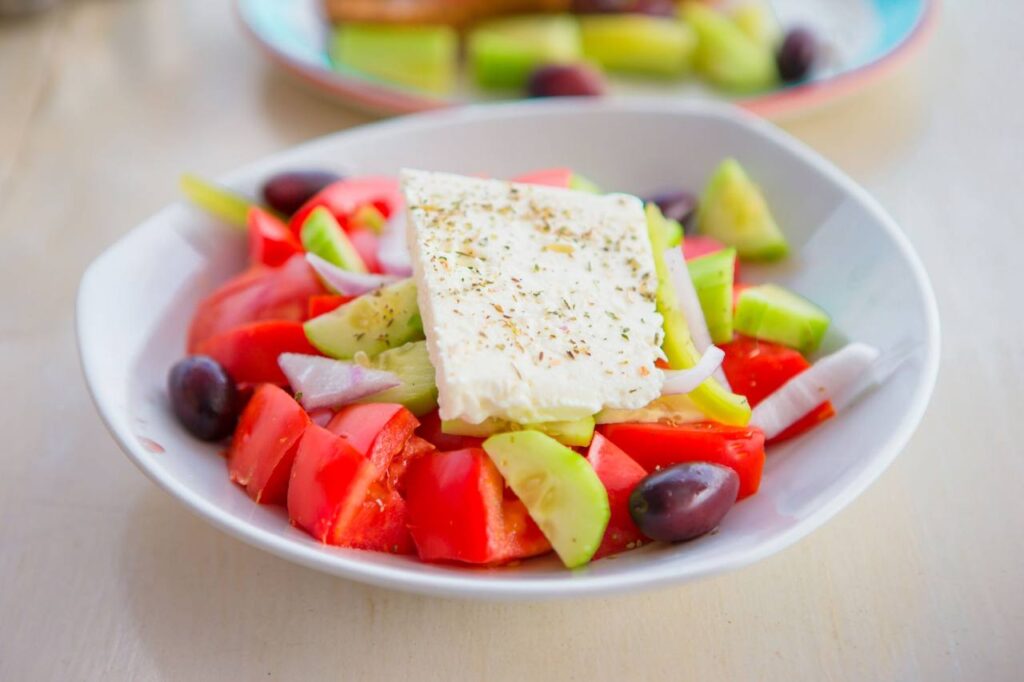
The same principle can be seen in a Greek salad. Ripe tomatoes, cucumber, onion, olives, feta and olive oil create a combination in which freshness, saltiness, acidity and richness work together without requiring a complicated sauce.
What Makes Greek Food Mediterranean? The Place of Fish, Meat and Dairy
A balanced understanding of what makes Greek food Mediterranean must include animal products as well as plant foods.
Greek cuisine contains many meat-based dishes, including grilled pork, lamb preparations, meatballs, slow-cooked stews and layered dishes such as moussaka. Chicken is also common, while regional and festive traditions influence the use of different meats.
Dairy products contribute another layer of variety. Feta is widely recognised internationally, but Greek cheese traditions extend far beyond it. Graviera, kasseri, manouri, mizithra and many local cheeses have distinct textures, flavours and uses.
Yogurt may be served on its own, used in sauces or incorporated into desserts. Cheese can accompany bread and vegetables, appear in savoury pies or be used as an ingredient in cooked dishes.
Fish, meat, dairy and eggs therefore belong to the broader picture of Greek food. The Mediterranean character of the cuisine does not mean that all traditional meals are vegetarian or that animal products are absent.
Instead, what makes Greek food Mediterranean is better understood through the full pattern of cooking: the range of ingredients, the frequency with which they appear, the methods used to prepare them and the cultural context in which meals are eaten.
What Makes Greek Food Mediterranean? The Difference Between Traditional Food and the Mediterranean Diet
Greek cuisine and the Mediterranean diet are closely related concepts, but they are not interchangeable.
Greek cuisine refers to the dishes, ingredients, techniques, customs and regional traditions associated with Greece. The Mediterranean diet is a broader dietary pattern that draws on food traditions from several Mediterranean countries and emphasises the overall balance of foods consumed.
The traditional Greek table offers many examples of foods associated with this dietary pattern: vegetables, legumes, fruit, grains, olive oil, nuts, herbs and a variety of other ingredients. Fish, dairy, eggs and meat also have their places, with their roles differing across households and regions.
This distinction matters when explaining what makes Greek food Mediterranean. A national cuisine cannot be reduced to a nutritional checklist, and no single dish defines the diet of an entire population.
A traditional Greek meal may be a vegetable stew with bread, a lentil soup, grilled fish with greens, a bean dish or a celebratory meal centred on meat. The overall dietary pattern depends on what people eat across days and weeks, not simply on whether an individual recipe contains olive oil.
Modern Greek eating habits also vary. Urban lifestyles, restaurant meals, convenience foods and changing work patterns influence what people eat today. Traditional recipes remain important, but contemporary diets are not identical to those of previous generations.
What Makes Greek Food Mediterranean? The Importance of Seasonality
Seasonality connects Greek cooking to agriculture, local markets and regional growing conditions.
Tomatoes, aubergines, courgettes, peppers, watermelons and other summer produce are associated with warm-weather cooking. Winter meals may make greater use of leafy greens, cabbage, citrus fruit, stored legumes and vegetables that keep well.
These patterns have never been completely uniform. Modern transport, refrigeration, greenhouse production and international trade mean that many ingredients are available for longer periods than they were historically.
Nevertheless, seasonal produce continues to influence Greek recipes and household preferences.
It helps explain what makes Greek food Mediterranean because the cuisine developed in close contact with a climate that supports a wide range of agricultural products. It also demonstrates that traditional cooking is not static: availability, preservation methods and modern supply chains all affect what appears on the table.
Seasonality can influence more than the choice of ingredients. It can determine whether vegetables are eaten raw, baked, simmered or preserved, and whether a dish is associated with a particular time of year.
What Makes Greek Food Mediterranean? The Cultural Meaning of Sharing a Meal
Food in Greece is not only about ingredients or cooking techniques. It also has a social role.
Family meals, gatherings with friends, celebrations and hospitality can all shape how food is prepared and served. A meal may include several dishes placed on the table for sharing, allowing diners to combine flavours and choose portions according to preference.
This is particularly visible in dishes such as Greek salad, dips, grilled foods, pies and a range of small plates. Not every Greek meal follows this format, but sharing is an important feature of many social occasions.
The custom of offering food or drink to a guest also reflects a broader tradition of hospitality. Coffee, sweets, fruit or a prepared meal can all become expressions of welcome, depending on the circumstances.
This social dimension adds depth to what makes Greek food Mediterranean. Cuisine is not merely a collection of recipes; it is also a set of habits through which people maintain relationships, mark celebrations and express generosity.
Similar customs exist throughout the Mediterranean, although each country and community expresses hospitality in its own way.
What Makes Greek Food Mediterranean? Regional Diversity Within Greece
Greek cuisine is not identical from one end of the country to the other.
Island cooking, mainland traditions, mountain communities and coastal towns have developed different relationships with their surroundings. Local agriculture, fishing, livestock, trade and migration all contribute to regional variation.
The Cyclades, for example, have distinctive traditions involving ingredients such as capers, tomatoes, legumes and local cheeses. Crete is particularly associated with olive oil, wild greens, herbs and a rich variety of local agricultural products. Northern Greek cooking includes traditions shaped by cooler conditions and historical connections with neighbouring Balkan regions.
These examples are not rigid boundaries. Ingredients and recipes move between regions, and individual households adapt them according to taste and availability.
Recognising this diversity is essential to understanding what makes Greek food Mediterranean. Greek cuisine shares characteristics with the wider region, but it cannot be represented adequately by a single salad, one meat dish or a short list of supposedly universal ingredients.
Its Mediterranean identity emerges from a broad family of regional food traditions that remain connected while preserving their own distinctive characteristics.
What Makes Greek Food Mediterranean? A Cuisine Shaped by History and Exchange
The Mediterranean has long been a region of movement. Merchants, sailors, migrants and travellers carried ingredients, cooking practices and ideas between ports, islands and inland communities.
Greek food reflects this history of contact. Its development has been influenced by ancient agricultural traditions, Byzantine food culture, Ottoman-era exchange, regional trade and more recent international influences.
These historical layers do not mean that Greek cuisine is simply a mixture of other cuisines. They show that culinary traditions develop through interaction as well as local continuity.
Recipes change as ingredients become available, households adopt new methods and communities adapt dishes to their own preferences. Over time, these changes can become part of a recognisable regional or national food culture.
This is another answer to what makes Greek food Mediterranean: Greek cuisine belongs to a connected culinary region, but its distinctive identity comes from the particular ways Greek communities have adopted, adapted and maintained their food traditions.
What Makes Greek Food Mediterranean? The Connection Between Tradition and Modern Life
Traditional Greek recipes continue to appear in home kitchens, tavernas, bakeries and restaurants, but the way people cook and eat has changed.
Some households still prepare large quantities of legumes, vegetable dishes and pies from scratch. Others rely more heavily on prepared ingredients or eat outside the home more frequently. Many combine traditional recipes with modern equipment, lighter cooking methods and ingredients that were not always readily available to earlier generations.
These changes do not automatically erase culinary identity.
Baking eggplant instead of frying it, for example, changes the technique but can preserve the essential structure of a moussaka. Using a different locally available cheese may alter a recipe while retaining its broader character. A family may also preserve a traditional dish for special occasions even if it no longer appears in the everyday menu.
To understand what makes Greek food Mediterranean, it is therefore useful to distinguish the underlying culinary principles from the precise methods used in every household.
Continuity and adaptation can exist together. Greek food remains connected to its agricultural landscape, regional traditions and Mediterranean history while continuing to evolve.
What Makes Greek Food Mediterranean? The Essential Characteristics of Greek Cuisine
The Mediterranean character of Greek food emerges from several connected features rather than one defining ingredient.
Olive oil plays a major role in everyday cooking. Vegetables and legumes appear in substantial dishes as well as accompaniments. Bread and grains remain familiar foods, while fish, meat, dairy and cheese contribute to a diverse culinary tradition. Herbs, lemon, garlic and other aromatics help create flavour without requiring elaborate combinations in every recipe.
Seasonality, regional variation and the relationship between food and hospitality are equally important. They connect the contents of the plate with the landscape, history and social life of Greece.
The most useful answer to what makes Greek food Mediterranean is therefore not that every Greek dish follows the same formula. It is that Greek cuisine shares the wider Mediterranean emphasis on agricultural ingredients, olive oil, varied plant foods, regional cooking and the cultural importance of meals, while expressing these characteristics through its own history and traditions.
Greek food is Mediterranean, but it is also distinctly Greek: a cuisine shaped by its own places, people, memories and ways of cooking.
What Makes Greek Food Mediterranean? Everyday Habits, Regional Ingredients and Culinary Identity
The answer to what makes Greek food Mediterranean becomes clearer when we look at how food fits into everyday Greek life. Ingredients matter, but so do shopping habits, cooking routines, preservation methods, family recipes and the relationship between local producers and the people who prepare their food.
Greek cuisine has developed through a close connection between the land, the sea and the kitchen. That connection can be seen in the use of seasonal vegetables, olive oil, legumes, bread, herbs, seafood and regional dairy products. It can also be seen in the way familiar ingredients are transformed into dishes that differ from one region to another.
What Makes Greek Food Mediterranean? The Everyday Greek Cooking Tradition
Greek home cooking includes many dishes that rely on a small number of familiar ingredients rather than elaborate preparation.
A pot of beans, vegetables simmered in tomato and olive oil, grilled fish with lemon, or greens dressed with olive oil can form the centre of a meal. These foods demonstrate what makes Greek food Mediterranean through ordinary cooking practices rather than through special-occasion recipes alone.
The approach is practical as well as culinary. Ingredients are combined according to their availability, the time required for preparation and the needs of the household. Some dishes can be cooked in advance, while others are prepared shortly before serving.
Recipes such as fasolada, fakes, briam and fasolakia ladera illustrate this tradition particularly well. Each has its own ingredients and preparation method, yet all show how familiar foods can create a substantial dish without requiring a complicated list of components.
This everyday cooking tradition is important because Greek cuisine cannot be understood solely through restaurant menus. Home cooking preserves many of the habits that connect Greek food with the wider Mediterranean food culture.
What Makes Greek Food Mediterranean? The Role of Local Produce
Local produce has helped shape Greek cooking for generations.
The combination of climate, soil, altitude and water availability influences which crops grow successfully in different parts of Greece. Olive trees thrive in many areas, while tomatoes, grapes, citrus fruit, legumes, herbs and a wide range of vegetables contribute to regional food traditions.
The exact selection varies from place to place. An island community may have different access to particular fish and seafood from an inland village. Mountain areas may have stronger traditions involving livestock, dairy products, wild greens and preserved foods.
These differences help explain what makes Greek food Mediterranean without suggesting that every Greek region eats the same food.
Local produce also influences flavour. A ripe summer tomato used in a Greek salad offers a different experience from a tomato that has been harvested early and transported over a long distance. Fresh herbs, seasonal fruit and regional olive oils can similarly affect the character of a dish.
Modern supply chains have made many ingredients available throughout the year, but local agriculture remains an important part of Greek culinary identity.
What Makes Greek Food Mediterranean? Traditional Markets and Food Shopping
Markets have long played an important role in the relationship between Greek households and the ingredients they cook.
Fresh vegetables, fruit, herbs, fish, meat, olives and cheese are among the foods that may be purchased from local markets, specialist shops and producers. The availability and variety of these products depend on the location, season and type of market.
Shopping in this way can influence what a household prepares. A cook may choose vegetables that look particularly good, select fish according to the catch available or buy ingredients for a dish associated with a particular season.
This practical connection between shopping and cooking helps explain what makes Greek food Mediterranean. Food choices are influenced not only by written recipes but also by the ingredients that are accessible, affordable and appealing at a particular time.
Traditional market culture is not universal across contemporary Greece, and many people also shop at supermarkets. Nevertheless, local markets remain an important expression of the relationship between producers, ingredients and regional cuisine.
What Makes Greek Food Mediterranean? The Importance of Homemade Vegetable Dishes
Vegetable dishes are a particularly revealing part of Greek cooking because they show how simple ingredients can become complete meals.
Briam combines vegetables such as aubergines, courgettes, potatoes, onions and tomatoes, generally with olive oil and herbs. Gemista features vegetables stuffed with rice and aromatic ingredients. Imam bayildi, found in Greek cooking as well as in the wider Eastern Mediterranean, centres on aubergines cooked with onions, tomatoes and olive oil.
These dishes have different histories and preparation methods, but they share a reliance on vegetables as major components rather than minor additions.
They also demonstrate what makes Greek food Mediterranean through the relationship between ingredients and technique. Slow cooking allows vegetables to soften, release moisture and absorb flavour from olive oil, tomato, onion and herbs.
A vegetable dish can therefore be satisfying without needing to imitate a meat-based recipe. It has its own texture, aroma and culinary purpose.
This variety is one reason Greek cuisine should not be reduced to grilled meat, feta cheese and salad. Those foods are familiar internationally, but the traditional vegetable repertoire is considerably broader.
What Makes Greek Food Mediterranean? The Place of Olive Oil in Vegetable Recipes
Olive oil is particularly important in Greek vegetable cooking because it contributes both flavour and texture.
In ladera dishes, vegetables are cooked with olive oil and commonly with tomato, onion and herbs. The oil helps carry the aromas of the other ingredients and contributes to the characteristic richness of the finished dish.
The quantity used can vary significantly between recipes and households. Traditional preparations may be generous with olive oil, while contemporary cooks may adjust the amount according to preference.
Understanding what makes Greek food Mediterranean therefore requires more than identifying olive oil as a common ingredient. It also requires understanding how the ingredient functions in cooking.
Olive oil can soften onions, help vegetables cook evenly, carry herbal aromas and contribute to a cohesive sauce. In a simple dish of green beans cooked with tomato, for example, the final flavour depends on how the beans, tomato, onion and oil develop together during cooking.
This is a culinary technique as much as an ingredient choice.
What Makes Greek Food Mediterranean? The Connection Between Legumes and Practical Cooking
Legumes have long been useful ingredients because dried beans, lentils and chickpeas can be stored for extended periods before cooking.
This practical advantage has helped make them important in many Mediterranean food traditions, including Greek cuisine. They can be transformed into soups, stews, salads and baked dishes, providing variety from ingredients that are relatively easy to keep in a household pantry.
Fasolada and fakes are familiar examples of Greek legume soups. Revithada, a chickpea preparation associated particularly with Sifnos, shows how a basic ingredient can develop a strong regional identity through a specific cooking tradition.
These dishes help explain what makes Greek food Mediterranean because they connect agricultural products, storage methods and everyday meal planning.
Legumes also combine readily with other familiar ingredients. Beans may be cooked with tomato, onion, carrot, celery, herbs and olive oil. Lentils can be prepared as a soup or served as part of a broader meal. Chickpeas may be baked slowly until tender.
The result is not one standard recipe but a family of dishes shaped by local preferences and household practice.
What Makes Greek Food Mediterranean? Bread, Olives and Simple Accompaniments
A Greek meal does not always need numerous separate dishes.
Bread, olives, cheese, seasonal vegetables or a simple salad may accompany a main preparation and help complete the meal. The combination depends on the household, the occasion and the food being served.
Bread can be used to accompany soups, beans and vegetable stews. Olives may appear as part of a shared table or as a simple accompaniment. Cheese can provide saltiness and richness alongside vegetables or bread.
These combinations show what makes Greek food Mediterranean in everyday dining: familiar ingredients can be brought together in flexible ways, allowing a meal to suit different circumstances without requiring an elaborate menu.
The specific combination should not be treated as a rigid national rule. Some meals are extensive, while others are deliberately simple. Regional habits and family preferences influence what appears on the table.
The broader pattern, however, demonstrates how basic foods can complement one another through flavour, texture and practical use.
What Makes Greek Food Mediterranean? The Relationship Between Fish and Coastal Life
Fish and seafood have a clear place in Greek cuisine, particularly in coastal communities and on islands.
The availability of particular species depends on geography, season, fishing practices and local markets. As a result, seafood traditions are diverse rather than uniform.
Fish may be grilled with olive oil and lemon, baked with vegetables, cooked in a tomato sauce or used in soups. Octopus and squid are prepared in several ways, while shellfish feature in regional dishes where they are available.
These traditions contribute to what makes Greek food Mediterranean because they connect cuisine with the sea and the livelihoods of coastal communities.
At the same time, seafood should not be presented as the main food of every Greek household. Cost, access, personal preference and location all influence consumption. Inland communities may rely more heavily on meat, legumes, dairy products and agricultural produce.
The Mediterranean identity of Greek cuisine emerges from this variety rather than from the assumption that every region follows the same pattern.
What Makes Greek Food Mediterranean? Preserving Food for Later Use
Preservation has helped Greek households make use of seasonal ingredients beyond the period in which they are harvested.
Olives can be cured, vegetables may be pickled, fruit can be made into preserves, and tomatoes can be processed into sauces or other preparations. Herbs can be dried, while legumes can be stored in their dried form until needed.
These practices reflect the practical relationship between seasonal agriculture and household cooking.
They also help explain what makes Greek food Mediterranean beyond the ingredients that appear fresh on the table. Traditional food culture includes methods for extending the usefulness of ingredients and reducing waste.
Preservation practices vary by region and household. Not every family prepares its own preserves today, and refrigeration and modern food distribution have changed how many people shop and cook.
Nevertheless, preserved foods remain visible in Greek culinary culture, from olives and pickled vegetables to fruit preserves served with coffee or offered to guests.
What Makes Greek Food Mediterranean? Family Recipes and Culinary Memory
Recipes are often passed from one generation to another through observation, repetition and shared meals.
A family may preserve a particular method for preparing stuffed vegetables, seasoning meat sauce, making a pie or cooking beans. The recipe may be written down, but it may also depend on remembered proportions, visual cues and techniques learned in the kitchen.
This helps explain what makes Greek food Mediterranean as a living food culture rather than simply a collection of traditional dishes.
A recipe can remain recognisable while changing in small ways. One cook may use more herbs, another may prefer a different cheese, and a third may adapt the preparation to the ingredients available locally.
Such differences do not necessarily mean that one version is correct and the others are wrong. They reflect the way food traditions develop through repeated practice and personal interpretation.
Family cooking also connects food with memory. Particular dishes may be associated with Sundays, religious celebrations, summer holidays or visits to relatives. These associations contribute to the meaning of Greek food beyond its taste.
What Makes Greek Food Mediterranean? The Difference Between Culinary Identity and Stereotypes
International descriptions of Greek food often focus on a limited group of familiar dishes: Greek salad, moussaka, souvlaki, feta and grilled fish.
These foods are important, but they cannot represent the full range of Greek cuisine.
A more complete understanding of what makes Greek food Mediterranean includes vegetable stews, legumes, regional pies, breads, local cheeses, preserved foods, seasonal greens, seafood, sweets and many other preparations that receive less attention internationally.
It also recognises that Greek food varies across islands, mainland regions, cities and villages. The food served in a contemporary restaurant may differ from the dishes prepared in a family kitchen, while festive meals may contain ingredients or preparations that are not part of everyday cooking.
Avoiding stereotypes does not mean rejecting familiar dishes. It means placing them within a larger culinary context.
Greek salad and moussaka can be excellent examples of Greek food, but neither alone explains the history, geography and everyday practices that shape the cuisine.
What Makes Greek Food Mediterranean? A Distinctive Cuisine Within a Shared Food Culture
Greek cuisine shares many characteristics with other Mediterranean food traditions, including the use of olive oil, vegetables, legumes, grains, herbs and locally available animal products.
However, shared ingredients do not make all Mediterranean cuisines identical.
Greek recipes have developed through particular regional histories, agricultural conditions, religious traditions, trade connections and household practices. These influences have produced dishes, flavours and customs that are recognisably Greek.
This is the central answer to what makes Greek food Mediterranean: Greek cuisine belongs to a wider Mediterranean food culture while maintaining its own distinctive identity.
Its character emerges from the interaction of ingredients, cooking methods, regional diversity, historical exchange and social customs. No single ingredient or recipe can explain all of these influences.
The cuisine is best understood as a connected whole: food shaped by the Mediterranean environment, developed through Greek history and continually adapted by the people who cook and eat it.
What Makes Greek Food Mediterranean? More Than Ingredients and Traditional Recipes
To understand what makes Greek food Mediterranean, it is useful to examine not only what Greeks eat, but also why particular ingredients and cooking methods became important. Geography, agriculture, trade, household economics and cultural traditions have all contributed to the development of Greek cuisine.
The result is a food culture that shares important characteristics with other Mediterranean cuisines while retaining its own regional dishes, flavours and customs.
What Makes Greek Food Mediterranean? The Influence of the Mediterranean Climate
The Mediterranean climate has helped shape the ingredients available to Greek cooks. Many parts of Greece experience hot, relatively dry summers and wetter winters, although conditions vary significantly between islands, coastal areas, mountains and northern regions.
Olive trees, grapevines, citrus fruit, herbs and a variety of vegetables thrive in suitable parts of the country. Other crops depend on local altitude, rainfall, soil and irrigation.
These conditions help explain what makes Greek food Mediterranean because the cuisine developed in relation to the agricultural environment. The ingredients available to households influenced both everyday meals and the dishes associated with particular regions.
Climate alone does not determine a cuisine, however. Farming practices, trade, preservation and changing consumer habits also influence what people eat. Greek food is the result of these factors working together over many generations.
What Makes Greek Food Mediterranean? Olive Groves and the Greek Landscape
Olive cultivation is closely associated with the Greek landscape and has influenced the country’s agricultural and culinary history.
Olives are grown in many regions, and the resulting oils differ in aroma, intensity and other characteristics. Olive oil is used in salads, vegetable dishes, sauces, marinades and numerous cooked preparations.
Its importance helps explain what makes Greek food Mediterranean, but olive oil should not be treated as an identical product everywhere. Cultivar, growing conditions, harvesting practices and processing methods all influence the final oil.
Greek cooks may choose different olive oils according to availability, personal preference and the intended use. Some oils are valued for a pronounced peppery character, while others have a milder flavour.
The relationship between olive cultivation and cuisine also demonstrates how a single agricultural product can influence an entire cooking tradition, from the preparation of simple greens to the flavour of a slow-cooked vegetable dish.
What Makes Greek Food Mediterranean? The Role of Wheat and Other Grains
Grains have been essential foods throughout much of the Mediterranean region, and Greek cuisine reflects this long agricultural tradition.
Bread is a familiar part of Greek meals, while flour is used to prepare pies, pastries, pasta-like products and numerous baked foods. Rice appears in stuffed vegetables, pilaf-style dishes and other preparations, while regional cooking also incorporates different grains according to local tradition.
This diversity helps explain what makes Greek food Mediterranean beyond the ingredients most frequently mentioned in discussions of the diet.
Grains can accompany soups and stews, provide the foundation of a meal or combine with vegetables, herbs and other ingredients to create a complete dish. Their importance has also been influenced by storage, affordability and the availability of local crops.
Greek cuisine therefore cannot be reduced to olive oil, tomatoes and seafood. Grains and bread are part of the wider agricultural foundation that supports its many regional food traditions.
What Makes Greek Food Mediterranean? The Importance of Seasonal Fruit
Fruit contributes freshness, variety and natural sweetness to Greek eating habits.
Oranges, lemons, grapes, figs, watermelons, melons, apples and other fruits are associated with different regions and seasons. Their availability varies according to climate, cultivation and modern distribution.
Fruit may be eaten fresh, served after a meal, incorporated into desserts or preserved for later use. Traditional spoon sweets, known as glyka tou koutaliou, can be made from different fruits and other ingredients, depending on the region and recipe.
These habits illustrate what makes Greek food Mediterranean through the use of locally familiar agricultural products in both everyday eating and hospitality.
Seasonal fruit also demonstrates the flexibility of Greek food culture. The same ingredient can be enjoyed fresh when it is in season and preserved when households wish to extend its use beyond the harvest period.
What Makes Greek Food Mediterranean? Herbs as an Expression of Place
Herbs contribute much more than fragrance to Greek cuisine. They can connect a dish with the landscape in which its ingredients are grown or gathered.
Oregano, thyme, rosemary, mint, dill, parsley and other herbs appear in different combinations throughout Greek cooking. Their use depends on the recipe, regional preferences and the ingredients with which they are paired.
Oregano may accompany grilled meat or vegetables, dill can feature in pies and vegetable dishes, and mint appears in certain meat preparations and savoury recipes. Rosemary is used in some roasted dishes, while parsley provides freshness to a variety of foods.
This diversity helps explain what makes Greek food Mediterranean without implying that every Greek recipe follows the same seasoning pattern.
Herbs can complement olive oil, lemon, garlic, vegetables, meat and seafood. They allow cooks to create different flavour profiles while working with ingredients that are often simple and familiar.
What Makes Greek Food Mediterranean? Cooking Slowly Rather Than Complicating a Dish
Many Greek dishes develop their flavour through gradual cooking rather than through elaborate preparation.
Legumes simmer until tender, vegetables cook slowly in tomato and olive oil, and meat may be braised until it becomes soft and absorbs the flavour of the sauce. These methods allow ingredients to combine while retaining the distinctive qualities of the main components.
This is one practical explanation of what makes Greek food Mediterranean: the cooking process often relies on patience, appropriate heat and the gradual development of flavour.
A pot of beans, for example, may require relatively little intervention once the ingredients have been prepared. The cook’s task is to manage the liquid, temperature and seasoning until the beans become tender and the flavours come together.
Similarly, a vegetable stew can develop a rich texture through the interaction of vegetables, olive oil and tomato without needing a large number of additional ingredients.
Not every Greek dish is slow-cooked, of course. Grilling, frying, baking and quick preparations are also important. The wider tradition includes multiple techniques suited to different ingredients and occasions.
What Makes Greek Food Mediterranean? Grilling, Baking and Oven Cooking
Greek cuisine uses a variety of cooking methods, each of which produces different textures and flavours.
Grilling is associated with foods such as souvlaki, grilled fish and various meat preparations. Baking is important for pies, bread, stuffed vegetables and dishes such as moussaka. Frying appears in foods including certain fritters and fried seafood, while boiling and simmering are common in soups, legumes and cooked greens.
This variety helps explain what makes Greek food Mediterranean more accurately than the idea that Greek cooking depends on one particular technique.
The method is usually selected according to the ingredient and the intended result. Grilling creates surface browning and a distinctive roasted flavour. Baking allows ingredients to cook together in a single dish, while simmering can soften vegetables and legumes and develop a cohesive sauce.
Traditional recipes also change as cooking equipment and household routines evolve. Modern ovens, refrigerators and kitchen appliances make some preparations easier without necessarily changing the identity of the finished dish.
What Makes Greek Food Mediterranean? The Connection Between Rural Life and Food
Rural life has contributed significantly to the development of Greek food traditions.
Agricultural communities historically relied on locally available crops, livestock, dairy products and preserved ingredients. Fishing communities developed different relationships with seafood, while mountain regions could have stronger traditions involving livestock, cheeses, wild greens and foods suited to cooler conditions.
These differences help explain what makes Greek food Mediterranean as a regional food culture rather than a single uniform menu.
The connection between rural life and cuisine is visible in many traditional recipes. Beans and lentils provide substantial meals, vegetables can be cooked according to the season, and local cheeses reflect differences in milk, production methods and regional practice.
Contemporary Greece is highly varied, and rural traditions should not be assumed to describe the daily diet of every household. Nevertheless, agricultural knowledge and regional food practices remain important to the country’s culinary identity.
What Makes Greek Food Mediterranean? The Influence of Islands and Coastal Communities
Greek islands and coastal settlements have developed food traditions shaped by their location, local resources and historical connections.
Fish and seafood are important in many coastal areas, but island cuisine is not exclusively seafood-based. Islands also have agricultural traditions involving vegetables, legumes, grains, fruit, olive oil, cheese and livestock, with the balance differing according to local conditions.
The Cyclades, the Dodecanese, the Ionian Islands and Crete each contain considerable internal diversity. Their recipes reflect not only geography but also historical exchange, local agriculture and household preferences.
These regional differences help explain what makes Greek food Mediterranean while demonstrating that the term Greek cuisine covers a wide range of culinary experiences.
The sea has connected island communities with other parts of Greece and the wider Mediterranean. Trade and travel have influenced the movement of ingredients and techniques, while local cooks have adapted these influences to their own environments.
What Makes Greek Food Mediterranean? The Role of Traditional Pies
Greek pies provide another important example of the relationship between local ingredients and practical cooking.
Pies may contain cheese, greens, herbs, vegetables, meat or other fillings enclosed in pastry or filo. Recipes differ according to region, season and household tradition.
Spanakopita, for example, combines spinach with ingredients such as feta, herbs and pastry. Other pies feature wild greens, leeks, cheese or local combinations of ingredients.
These preparations help explain what makes Greek food Mediterranean because they demonstrate how grains, vegetables, dairy products and herbs can be brought together in a flexible culinary form.
Pies can serve as snacks, light meals, accompaniments or part of a larger table. They are also practical for using available ingredients and preparing food that can be divided into portions.
Their diversity illustrates an important feature of Greek cuisine: a familiar cooking method can support many regional interpretations without producing identical dishes.
What Makes Greek Food Mediterranean? Fermented Dairy and Regional Cheese
Dairy products contribute distinctive flavours and textures to Greek cuisine.
Feta is perhaps the best-known Greek cheese internationally, but regional traditions include many other varieties. Graviera, kasseri, manouri and mizithra differ in texture, production method and flavour, and their uses depend on the recipe and local preference.
Yogurt is another familiar product. It can be eaten plain, served with honey or fruit, used in sauces or incorporated into other preparations.
These foods help explain what makes Greek food Mediterranean because they connect animal husbandry, regional production and culinary practice.
Cheese can accompany bread, olives and vegetables, appear in savoury pies or be incorporated into cooked dishes. Yogurt may provide a cooling contrast to seasoned foods or form part of a simple dessert.
The range of dairy products also reminds us that Mediterranean food traditions are not exclusively plant-based. They include different combinations of plant foods and animal products, with patterns varying between countries, regions and households.
What Makes Greek Food Mediterranean? Food Preservation and the Changing Seasons
Preserving ingredients has helped Greek households manage seasonal abundance and make food available later in the year.
Olives may be cured, vegetables pickled, fruit made into preserves and tomatoes processed for use in sauces. Dried legumes can be stored in the pantry, while herbs can be dried for later cooking.
These methods reflect practical responses to the availability of ingredients. When a particular crop is plentiful, preservation can extend its usefulness beyond the immediate harvest.
This connection between preservation and seasonality helps explain what makes Greek food Mediterranean as a food tradition shaped by agriculture and household knowledge.
Preserved foods also develop their own flavours and uses. Olives, pickled vegetables and fruit preserves can accompany meals or be served as part of hospitality, while stored legumes remain useful ingredients for soups and stews.
Modern refrigeration, commercial processing and year-round distribution have changed how many people preserve and purchase food. Yet traditional methods remain part of Greek culinary culture and continue to influence recipes and preferences.
What Makes Greek Food Mediterranean? Food as an Expression of Hospitality
Food in Greece often plays an important role in welcoming guests and bringing people together.
Hospitality may involve offering coffee, sweets, fruit, a drink or a prepared meal. The form of the gesture depends on the relationship, the occasion and the household.
A shared table can also include several dishes, allowing guests to sample different flavours and eat at their own pace. Such meals may be especially important during family gatherings, celebrations and visits with friends.
This social dimension contributes to what makes Greek food Mediterranean because food traditions are not limited to ingredients and cooking techniques. They also involve the customs through which meals are offered, shared and remembered.
Similar traditions of hospitality exist throughout the Mediterranean, but Greek households express them through their own language, recipes and social practices.
The familiar Greek idea of treating someone to food or drink reflects this broader connection between cooking and generosity. A meal can serve as a practical act of care as well as an opportunity to enjoy food.
What Makes Greek Food Mediterranean? The Influence of Religion and the Calendar
Religious and cultural calendars have influenced Greek food traditions, particularly around major celebrations and periods of fasting.
Orthodox Christian fasting practices have historically shaped the ingredients used during certain periods of the year. Depending on the particular fast, meat, dairy products, eggs or other foods may be restricted, while legumes, vegetables, grains and other suitable ingredients become more prominent.
Lenten recipes include dishes such as beans, lentils, vegetable stews and other preparations made without ingredients excluded by the relevant fasting rules. Festive periods, meanwhile, are associated with their own regional dishes and family customs.
These traditions help explain what makes Greek food Mediterranean by showing how cuisine responds not only to geography and agriculture but also to religious observance and social life.
Practices vary among individuals, households and communities, and not every Greek person follows the same fasting customs. Nevertheless, the influence of the religious calendar remains visible in many traditional recipes and celebrations.
What Makes Greek Food Mediterranean? The Balance Between Tradition and Modern Eating
Greek food today reflects both inherited traditions and contemporary lifestyles.
Many familiar dishes continue to be prepared in homes and restaurants, but people also use modern equipment, purchase more prepared ingredients and adapt recipes to their schedules and preferences.
Some cooks bake eggplant instead of frying it. Others reduce the amount of oil, alter the seasoning or use ingredients that are more readily available where they live. These changes can affect flavour and texture without necessarily removing the dish from the wider Greek culinary tradition.
Understanding what makes Greek food Mediterranean therefore requires distinguishing between a recipe’s essential character and every detail of its preparation.
A modern version of a traditional dish may retain its principal ingredients and structure while using a different technique. At the same time, not every contemporary food choice should automatically be described as traditional.
Recognising this distinction allows Greek cuisine to be understood as a living food culture: one that preserves familiar dishes while continuing to adapt to changing circumstances.
What Makes Greek Food Mediterranean? The Main Features That Define the Cuisine
Greek cuisine shares many characteristics with the wider Mediterranean food tradition, but its identity emerges from the way these characteristics come together in a specifically Greek context.
Olive oil is central to many cooking methods. Vegetables and legumes appear in substantial dishes, while bread and grains support everyday meals. Fish, seafood, meat, dairy products and cheese contribute to regional variety. Herbs, lemon, garlic and other aromatics help shape flavour, while baking, grilling, frying, boiling and simmering provide different ways to prepare ingredients.
Seasonality, local agriculture, preservation, hospitality and regional diversity add further dimensions.
Together, these features explain what makes Greek food Mediterranean more convincingly than any single ingredient or famous recipe. Greek cuisine belongs to a wider regional food culture, yet its dishes and customs reflect the landscapes, history and communities of Greece.
It is this combination of shared Mediterranean characteristics and distinctive Greek traditions that gives the cuisine its identity.
What Makes Greek Food Mediterranean? Understanding the Cuisine Through Its History and Culture
The question of what makes Greek food Mediterranean cannot be answered through ingredients alone. Greek cuisine reflects centuries of agricultural development, regional exchange, religious customs, household cooking and changing ways of life.
Its Mediterranean character comes from the relationship between these influences. Olive oil, vegetables, legumes, grains, herbs, fish and other ingredients contribute to the cuisine, but their meaning becomes clearer when we examine how Greek communities have used them over time.
What Makes Greek Food Mediterranean? The Historical Foundations of Greek Cuisine
Greek cuisine developed over many centuries, drawing on agricultural traditions, trade networks, regional exchange and the movement of people across the Mediterranean.
Ancient Greek communities cultivated grains, olives and grapes, while fish, legumes, vegetables and other locally available foods contributed to different diets. Later historical periods introduced further influences, including developments associated with Byzantine food culture, Ottoman-era exchange and changing patterns of trade.
These influences help explain what makes Greek food Mediterranean as a historical food culture rather than a collection of recipes that appeared fully formed at one particular moment.
It is important, however, not to assume that modern Greek dishes have remained unchanged since antiquity. Many familiar recipes developed gradually, and some of the foods now considered essential to Greek cuisine became widespread only after ingredients from the Americas, including tomatoes, peppers and potatoes, reached Europe.
Greek cuisine therefore combines long-established agricultural practices with ingredients and methods adopted during later periods. Its identity reflects continuity as well as adaptation.
What Makes Greek Food Mediterranean? The Influence of Ancient Agricultural Traditions
Agriculture has played a major role in the development of Greek food.
Olive cultivation, grape growing and cereal production formed important parts of agricultural life in different areas of the ancient Greek world. Local conditions determined which crops could be grown successfully, while trade helped communities obtain ingredients that were not readily available nearby.
These agricultural traditions provide historical context for what makes Greek food Mediterranean. They connect food with the land and with the practical knowledge required to cultivate, harvest, store and prepare ingredients.
Agriculture also influenced social organisation. Harvests, seasonal work and the availability of stored foods affected household routines and communal life.
Although modern farming differs greatly from ancient practices, the relationship between agricultural production and cuisine remains important. Regional ingredients continue to influence the foods associated with different parts of Greece.
What Makes Greek Food Mediterranean? The Role of Byzantine Food Culture
Byzantine food culture forms another important part of the historical background of Greek cuisine.
Food habits in the Byzantine Empire were influenced by social status, religious observance, regional resources and trade. The empire connected territories across the eastern Mediterranean, creating opportunities for ingredients, culinary ideas and food practices to circulate.
Religious fasting also shaped eating patterns. Periods of fasting encouraged the use of foods permitted under the relevant rules, including various vegetables, legumes and grains.
This historical context helps explain what makes Greek food Mediterranean through the interaction of food, religion and cultural exchange.
It would be misleading to attribute every modern Greek recipe directly to Byzantine cooking. Culinary traditions change over time, and the historical evidence does not support treating modern cuisine as an unchanged survival of one historical period.
Nevertheless, Byzantine food culture contributed to the wider environment in which Greek culinary traditions developed.
What Makes Greek Food Mediterranean? Ottoman-Era Exchange and Regional Influences
The Ottoman period had a significant influence on the food cultures of Greece and neighbouring regions.
For centuries, communities across the eastern Mediterranean and the Balkans interacted through trade, migration, shared urban environments and changing political boundaries. Ingredients, techniques and dishes circulated between these communities, often developing different forms in different places.
This history helps explain what makes Greek food Mediterranean without suggesting that Greek cuisine developed in isolation.
Similarities can be found in pastries, stuffed vegetables, meat preparations, sweets and other categories of food across several regional cuisines. However, shared dishes do not necessarily have one simple origin, and their histories can be difficult to separate into exclusive national categories.
Greek cooks adopted, adapted and maintained food practices within their own regional and household traditions. Over time, particular versions became associated with Greek culinary identity.
Recognising historical exchange allows Greek cuisine to be understood more accurately: as a distinctive tradition shaped partly through contact with neighbouring food cultures.
What Makes Greek Food Mediterranean? How Tomatoes Became Part of Greek Cooking
Tomatoes are now strongly associated with Greek cuisine, appearing in salads, sauces, stews, stuffed vegetables and many oven-baked dishes.
Their importance can make it easy to forget that tomatoes originated in the Americas and reached Europe after the transatlantic exchanges of the early modern period.
Their adoption illustrates what makes Greek food Mediterranean in an important way: traditional cuisines are not necessarily based exclusively on ingredients that have existed in a region since antiquity.
Over time, tomatoes became well suited to numerous Greek preparations. They could be cooked with onion, garlic, olive oil and herbs to create sauces, or combined with vegetables and rice in baked dishes.
Their acidity and moisture also influence the texture and flavour of recipes.
Today, tomatoes are so familiar in Greek cooking that many people think of them as inseparable from the cuisine. Their history demonstrates how an introduced ingredient can become central to a regional food tradition through repeated use and adaptation.
What Makes Greek Food Mediterranean? The Adoption of Potatoes and Peppers
Potatoes and peppers provide further examples of how Greek food traditions have changed over time.
Both ingredients originated in the Americas and became established in European cooking after the Columbian Exchange. Their introduction expanded the range of ingredients available to cooks and eventually influenced numerous regional dishes.
Potatoes are now used in roasted dishes, stews, vegetable bakes and some versions of moussaka. Peppers appear in stuffed vegetables, salads, sauces and other preparations.
These ingredients help explain what makes Greek food Mediterranean because the cuisine has developed through the incorporation of foods that became available in later historical periods.
The adoption of an ingredient does not automatically make a dish less traditional. Once a food becomes established within household cooking, it can acquire a strong local identity.
The history of Greek cuisine is therefore not a simple division between ancient ingredients and modern additions. It is a continuing process through which ingredients, techniques and preferences become part of everyday food culture.
What Makes Greek Food Mediterranean? The Connection Between Geography and Regional Recipes
Greek geography has encouraged considerable regional variation.
Islands, coastal settlements, fertile plains and mountainous areas offer different agricultural opportunities and access to ingredients. Communities have consequently developed distinct ways of preparing foods, preserving harvests and combining local products.
Crete, for example, is associated with a wide variety of olive oils, wild greens, herbs, cheeses and vegetable dishes. Island cuisines may include preparations shaped by fishing, local crops and historical trading connections. Mainland regions also contain diverse food traditions influenced by climate, agriculture and neighbouring communities.
This variety helps explain what makes Greek food Mediterranean without reducing the entire country to a single culinary pattern.
Regional identity does not mean that ingredients or recipes are confined to one place. People travel, products move between regions, and dishes are adapted by households and restaurants.
The result is a cuisine with shared characteristics and substantial internal diversity.
What Makes Greek Food Mediterranean? The Importance of Religious Fasting
Religious observance has influenced Greek food traditions, particularly through Orthodox Christian fasting periods.
Depending on the particular fast, restrictions may apply to meat, dairy products, eggs or other foods. Recipes based on legumes, vegetables, grains, olive oil and other permitted ingredients consequently become more prominent during certain periods.
These practices have encouraged the development and preservation of dishes that do not rely on meat or dairy as their main components.
They help explain what makes Greek food Mediterranean by demonstrating how religious customs can influence ingredients, cooking methods and the organisation of meals.
Fasting practices vary among individuals and households, and not every Greek person follows the same rules. It is therefore more accurate to describe fasting as an important influence on Greek food culture than to assume that it determines the everyday diet of the entire population.
Nevertheless, its historical and cultural significance remains visible in many traditional recipes and seasonal food customs.
What Makes Greek Food Mediterranean? Food and the Greek Orthodox Calendar
The Greek Orthodox calendar includes religious celebrations and fasting periods that can influence what families prepare and serve.
Christmas, Easter and other important occasions are associated with particular foods, although the precise dishes vary by region and household. Easter celebrations, for example, may include lamb or other meat preparations, festive breads and eggs, while different communities maintain their own local customs.
The food served during fasting periods can differ markedly from the meals prepared for celebrations.
This relationship helps explain what makes Greek food Mediterranean through the connection between cuisine and the social calendar. Food is not always chosen solely according to taste or ingredient availability; it may also reflect religious meaning, family memory and communal identity.
These customs are not identical across all Greek communities, and modern households may observe them in different ways. Yet the relationship between food and religious celebrations remains an important part of Greek culinary culture.
What Makes Greek Food Mediterranean? The Influence of Migration on Greek Food
Migration has helped spread Greek food beyond Greece and has also influenced the ingredients and cooking practices available to Greek communities abroad.
Greek migrants established restaurants, bakeries and food businesses in numerous countries. They brought recipes, culinary skills and familiar ingredients while adapting their menus to local supplies, regulations and customer preferences.
This process helps explain what makes Greek food Mediterranean in an international context. Greek cuisine can retain a recognisable identity while changing in response to the places where people prepare and eat it.
Restaurants abroad may emphasise dishes that are less prominent in everyday home cooking, while some ingredients may be replaced because particular Greek products are difficult to obtain.
At the same time, Greek communities have helped preserve recipes, food customs and regional traditions across generations.
Migration therefore contributes to the modern visibility of Greek cuisine while demonstrating how food traditions evolve when they move between countries.
What Makes Greek Food Mediterranean? The Difference Between Greek Cuisine and Greek Restaurant Food
Greek restaurant menus often introduce international diners to a selection of well-known dishes, but they do not represent every aspect of Greek cooking.
A restaurant may specialise in grilled meat, seafood, mezze, regional specialities or a broad menu of familiar Greek dishes. Its selection depends on the location, the type of establishment, ingredient availability and the preferences of its customers.
Home cooking can be different. Families may prepare legumes, vegetable stews, pies and other everyday dishes that receive less attention on international restaurant menus.
This distinction helps explain what makes Greek food Mediterranean more fully. A cuisine includes the meals people prepare at home, the foods associated with celebrations, regional traditions and the dishes served commercially.
Restaurant food is an important expression of Greek culinary identity, but it represents only one part of the wider food culture.
Understanding this difference also helps explain why international perceptions of Greek cuisine sometimes focus on a narrower group of dishes than those eaten throughout Greece.
What Makes Greek Food Mediterranean? The Role of Greek Restaurants Abroad
Greek restaurants around the world have helped make dishes such as Greek salad, souvlaki, gyros and moussaka familiar to international audiences.
These establishments provide an introduction to Greek ingredients and cooking methods, but their menus also reflect local conditions. Some focus on traditional preparations, while others combine Greek influences with contemporary techniques or adapt recipes for customers unfamiliar with particular ingredients.
This helps explain what makes Greek food Mediterranean as a living culinary tradition that continues to develop beyond its place of origin.
A Greek restaurant in another country may use locally sourced vegetables, substitute a particular cheese or modify a dish’s seasoning. Such decisions can change the finished product without necessarily removing its Greek character.
The most useful way to evaluate these variations is to consider the ingredients, preparation methods and culinary context rather than assuming that every restaurant outside Greece offers the same food.
Greek cuisine can remain recognisable internationally while expressing different interpretations of its regional traditions.
What Makes Greek Food Mediterranean? Traditional Ingredients in Contemporary Cooking
Contemporary Greek cooking often combines traditional ingredients with modern equipment, changing lifestyles and new culinary influences.
Olive oil, legumes, vegetables, herbs and regional cheeses remain useful ingredients in both traditional and modern preparations. At the same time, cooks may use different techniques, adjust portion sizes or alter recipes to suit contemporary preferences.
For example, eggplant can be baked instead of fried, vegetables can be roasted using modern ovens, and traditional legume dishes can be prepared in equipment that reduces cooking time.
These adaptations help explain what makes Greek food Mediterranean without suggesting that traditional cuisine must remain unchanged to retain its identity.
The important distinction is between modifying a method and losing the defining characteristics of a dish. Some adaptations preserve the main ingredients and structure, while others create a substantially different preparation.
Both can be valid forms of cooking, but describing them accurately helps maintain a clear understanding of Greek culinary tradition.
What Makes Greek Food Mediterranean? Why Culinary Identity Cannot Be Reduced to One Dish
No single Greek dish can fully explain the relationship between Greek cuisine and the Mediterranean region.
Greek salad demonstrates the use of fresh vegetables, olives, feta and olive oil. Fasolada illustrates the importance of legumes and simmered dishes. Briam highlights vegetable cooking, while grilled fish demonstrates the influence of coastal life. Moussaka combines vegetables, meat sauce and béchamel in a layered baked preparation.
Each dish reveals a different aspect of the cuisine.
Together, they help explain what makes Greek food Mediterranean: a broad culinary tradition shaped by agriculture, regional ingredients, historical exchange, cooking methods and social customs.
The same principle applies to the Mediterranean diet. It is a dietary pattern rather than a single recipe, and it includes different national and regional food traditions.
Greek cuisine is one distinctive expression of that wider Mediterranean heritage. Its identity emerges from the relationship between its ingredients, history and communities rather than from any one famous dish.
What Makes Greek Food Mediterranean? The Lasting Identity of Greek Cuisine
Greek food continues to evolve, but many of its defining characteristics remain connected to the Mediterranean environment and to long-established cooking traditions.
Olive oil, vegetables, legumes, grains, herbs, seafood, meat and dairy products contribute to a diverse culinary repertoire. Regional differences reflect local agriculture and history, while family meals, hospitality and religious celebrations give food a social and cultural dimension.
These characteristics provide a fuller explanation of what makes Greek food Mediterranean than a list of ingredients alone.
Greek cuisine shares a wider Mediterranean heritage, yet its dishes and customs have developed through the particular experiences of Greek communities. The result is a distinctive food culture that combines continuity with adaptation.
Understanding what makes Greek food Mediterranean ultimately means recognising both sides of that identity: the shared characteristics that connect Greece to the Mediterranean and the regional traditions that make Greek cuisine recognisably its own.
What Makes Greek Food Mediterranean? The Details That Shape Greek Food Culture
To understand what makes Greek food Mediterranean, it is worth examining the details that connect everyday meals with Greek history, local ingredients and cultural habits. A cuisine is not defined only by its best-known recipes. It is also shaped by how people shop, cook, preserve food, welcome guests and pass culinary knowledge between generations.
Greek food reflects this combination of practical cooking and cultural identity. Its Mediterranean characteristics are visible in its ingredients, but they also emerge from the relationship between food and the communities that prepare it.
What Makes Greek Food Mediterranean? The Connection Between Local Ingredients and Regional Identity
Local ingredients can influence the character of a dish long before cooking begins.
Olive oils differ in aroma and intensity, cheeses vary in texture and saltiness, and vegetables develop different characteristics according to their varieties, growing conditions and stage of ripeness. These differences can influence the final flavour of a recipe even when the cooking method remains unchanged.
This helps explain what makes Greek food Mediterranean in a way that goes beyond identifying a list of typical ingredients.
A salad prepared with ripe summer tomatoes, fresh cucumber, olives, feta and olive oil depends on the quality and balance of its components. A vegetable stew depends on the flavour of the vegetables, the development of the sauce and the amount of olive oil used. A cheese pie reflects both the filling and the characteristics of the pastry.
Regional ingredients therefore contribute to the identity of Greek cooking. They connect recipes with the places where their components are produced and with the preferences of the people who use them.
What Makes Greek Food Mediterranean? Why Simple Recipes Require Good Ingredients
Simple cooking does not necessarily mean effortless cooking.
When a recipe contains relatively few ingredients, each one becomes more noticeable. The flavour of the olive oil, the ripeness of the tomatoes, the quality of the cheese and the freshness of the herbs can all influence the result.
This is another practical explanation of what makes Greek food Mediterranean. Many familiar Greek preparations rely on the interaction of a small number of ingredients rather than on complicated sauces or extensive seasoning.
Consider a dish of cooked greens dressed with olive oil and lemon. Its success depends on cooking the greens until tender without making them unpleasantly soft, removing excess water and balancing the dressing. The ingredient list is short, but the preparation still matters.
The same principle applies to Greek salad, grilled fish and many vegetable dishes. Simplicity gives the ingredients room to express their individual qualities.
What Makes Greek Food Mediterranean? The Importance of Balance in Greek Flavours
Greek cooking frequently combines ingredients that contribute different elements of flavour.
Olive oil adds richness, lemon contributes acidity, herbs provide aroma, and salt enhances the taste of the other components. Tomatoes bring both acidity and sweetness, while onions and garlic can develop deeper flavours when cooked slowly.
Understanding what makes Greek food Mediterranean involves recognising how these elements work together.
A dish can become heavy if it contains too much oil, sharp if the acidity is excessive or unbalanced if the seasoning overwhelms the main ingredient. The objective is not to make every flavour equally strong but to allow the components to complement one another.
This balance varies by recipe. A lemon-forward dish of fish may taste very different from a slowly cooked tomato and vegetable preparation, yet both can belong comfortably within Greek cuisine.
What Makes Greek Food Mediterranean? The Role of Texture in Traditional Dishes
Texture is an important but sometimes overlooked part of Greek cooking.
A successful fasolada should contain tender beans and a broth with sufficient body. Briam should have softened vegetables without becoming an indistinguishable purée. A well-made spanakopita combines a savoury filling with pastry that provides contrast, while moussaka brings together tender vegetables, a concentrated meat filling and a creamy topping.
These examples help explain what makes Greek food Mediterranean beyond its ingredients and aromas.
Cooking time, moisture control and preparation methods all influence texture. Vegetables may need to be drained before baking, legumes require sufficient cooking to become tender, and sauces often need to reduce before they are combined with other ingredients.
Texture also affects how a dish is served. Some preparations are intended to be eaten with a spoon, while others should hold their shape when cut into portions.
What Makes Greek Food Mediterranean? The Relationship Between Food and the Seasons
Seasonal eating has influenced Greek cooking because the availability of produce changes throughout the year.
Summer brings a variety of vegetables and fruits, while other seasons provide different greens, citrus fruit, stored legumes and vegetables that keep well. These patterns influence household menus and the recipes associated with particular times of year.
This relationship helps explain what makes Greek food Mediterranean through the connection between the agricultural calendar and everyday cooking.
Seasonality does not mean that every Greek household follows a fixed seasonal menu. Modern transport, refrigeration and greenhouse production have extended the availability of many ingredients. Nevertheless, seasonal produce remains relevant to local markets, regional traditions and the flavour of familiar dishes.
Choosing ingredients when they are at their best can also make simple preparations more satisfying. Ripe tomatoes, for example, may need little more than olive oil, salt and a few complementary ingredients.
What Makes Greek Food Mediterranean? How Traditional Recipes Adapt to Modern Kitchens
Greek recipes continue to change as household routines and cooking equipment evolve.
Some cooks follow family methods closely, while others adapt quantities, ingredients or preparation times to suit their circumstances. Baking eggplant instead of frying it, using modern appliances to prepare legumes or adjusting a recipe to accommodate a different oven are all examples of practical adaptation.
These changes help explain what makes Greek food Mediterranean as a living tradition rather than a fixed collection of historical instructions.
The result of an adaptation depends on what changes. A different cooking technique may preserve the central ingredients and structure of a dish, while a substantial change to those elements may create a new interpretation.
Neither situation needs to be judged automatically as good or bad. What matters is describing the preparation accurately and understanding the relationship between the original tradition and the modern version.
What Makes Greek Food Mediterranean? The Difference Between Authenticity and Familiarity
Internationally familiar dishes are not necessarily representative of everything Greeks eat.
Greek salad, moussaka, souvlaki and gyros are important parts of the cuisine, but everyday Greek cooking also includes legumes, vegetable stews, pies, local cheeses, cooked greens and many regional preparations that are less familiar abroad.
This distinction helps explain what makes Greek food Mediterranean without reducing the cuisine to a handful of internationally recognised dishes.
Authenticity is also not always a question of using one exact recipe. Family traditions differ, and regional variations can be equally meaningful within their own contexts. At the same time, not every dish sold as Greek abroad necessarily follows a traditional Greek preparation.
A useful approach is to examine the ingredients, techniques and cultural context of a dish rather than relying only on its name or presentation.
What Makes Greek Food Mediterranean? The Importance of Culinary Knowledge Passed Between Generations
Culinary knowledge is often transmitted through repeated practice.
A person may learn how long to cook beans by watching an experienced cook, recognise when a tomato sauce has reduced sufficiently or discover how to season a dish through repeated tasting. These skills can be difficult to capture completely in a written recipe because they depend partly on observation and judgement.
This helps explain what makes Greek food Mediterranean as a practical tradition.
Written recipes remain valuable, but they do not always communicate every detail of a cooking method. Ingredient size, heat intensity, the amount of moisture released and differences between kitchen equipment can all influence the final result.
Family cooking preserves many of these skills through experience. It also allows recipes to be adjusted to suit different ingredients and personal preferences without necessarily losing their essential character.
What Makes Greek Food Mediterranean? The Relationship Between Food and Hospitality
Food often becomes a way to express welcome in Greek social life.
Offering coffee, sweets, fruit or a meal can communicate generosity and a willingness to make guests feel comfortable. The form of hospitality depends on the occasion, the relationship between people and the customs of the household.
This social dimension helps explain what makes Greek food Mediterranean beyond cooking techniques and ingredient selection.
Meals can provide opportunities for conversation, family connection and celebration. Food may be prepared in larger quantities when relatives or friends gather, and dishes may be placed on the table for sharing.
These practices vary across households and generations, but they demonstrate that cuisine includes social habits as well as recipes.
What Makes Greek Food Mediterranean? How Food Connects People With Place
Food can create a connection with a particular place even when the person eating it is far away.
A regional cheese, a dish associated with an island, a family recipe or an ingredient purchased from a local producer can evoke memories of a landscape and the people connected with it. Such associations help explain why certain foods remain important even when everyday diets change.
This is another dimension of what makes Greek food Mediterranean: cuisine can express regional identity through ingredients, preparation methods and memories associated with meals.
Greek food is not uniform across the country. Local traditions reflect differences in agriculture, climate, history and cultural exchange. These differences create a diverse culinary landscape while maintaining connections through shared ingredients and broader cooking practices.
What Makes Greek Food Mediterranean? The Lasting Relationship Between Food and Culture
Greek cuisine combines agricultural products, cooking techniques, regional variation and social customs into a recognisable food culture.
Olive oil, vegetables, legumes, grains, fish, meat, dairy products and herbs all contribute to its range. Historical exchange and modern adaptation have influenced how these ingredients are used, while household traditions and regional practices continue to shape individual dishes.
The answer to what makes Greek food Mediterranean therefore lies in the interaction of these elements rather than in one defining characteristic.
Greek cuisine shares important features with other Mediterranean food traditions, but its particular recipes, regional identities and social customs make it distinct. Understanding this relationship provides a fuller picture of Greek food than any short list of famous dishes could offer.
What Makes Greek Food Mediterranean? A Deeper Look at Greek Culinary Traditions
The question of what makes Greek food Mediterranean becomes more meaningful when we look at the complete food culture rather than focusing only on individual ingredients. Greek cuisine connects agricultural production, regional cooking, historical exchange, family habits and the social importance of sharing meals.
Its Mediterranean character is visible in the use of olive oil, vegetables, legumes, grains, herbs and locally available animal products. However, the identity of Greek food also depends on how these ingredients are combined, how dishes are prepared and how culinary knowledge is passed between generations.
What Makes Greek Food Mediterranean? The Relationship Between Food and Everyday Life
Greek food culture is built around both practical meals and occasions when food becomes a central part of social life.
A weekday meal might consist of beans, lentils, a vegetable dish, bread or a simple preparation of fish. A family gathering may include several cooked dishes, salads, cheese, bread and a dessert. The difference lies not only in the ingredients but also in the time, purpose and social setting of the meal.
This helps explain what makes Greek food Mediterranean beyond a narrow focus on recipes. Food is part of everyday routines, household planning, hospitality and celebration.
Traditional cooking has also developed around the practical needs of families. Dishes that can be prepared in advance, reheated or shared among several people remain useful in modern households, even when work schedules and lifestyles differ from those of previous generations.
What Makes Greek Food Mediterranean? The Importance of Home-Cooked Meals
Home cooking remains an important way in which Greek culinary traditions are maintained.
Preparing a pot of lentils, cooking vegetables with olive oil, making a pie or assembling a baked dish allows familiar ingredients to be used in ways that reflect household preferences. The same recipe may be prepared slightly differently by different cooks, depending on their experience and the ingredients available.
These practices illustrate what makes Greek food Mediterranean through continuity and adaptation. Recipes can be passed between generations while allowing room for personal judgement.
Home cooking also provides opportunities to use seasonal ingredients and adjust the balance of a meal. One household may serve a vegetable dish with bread and cheese, while another may combine it with fish or meat.
There is no single menu that represents every Greek home. The wider tradition is defined by a collection of related practices rather than one uniform set of daily meals.
What Makes Greek Food Mediterranean? The Role of Family Recipes
Family recipes often carry information that goes beyond written ingredient lists.
A cook may know how finely to chop an onion, when a sauce has reduced enough or how much lemon a particular dish needs. These decisions are learned through repetition and observation, and they can vary between households.
This helps explain what makes Greek food Mediterranean as a living culinary culture. Food traditions survive not only because recipes are recorded but because people continue to prepare, taste, adjust and share them.
Family recipes can also change over time. An ingredient may become easier to obtain, a cooking method may be adapted to modern equipment, or a dish may be prepared less frequently as household routines change.
Such adaptations do not necessarily erase tradition. They show how culinary knowledge can remain relevant while responding to new circumstances.
What Makes Greek Food Mediterranean? The Importance of Cooking With Olive Oil
Olive oil connects numerous categories of Greek cooking.
It may be used to soften onions, cook vegetables, prepare tomato sauces, dress salads, roast ingredients or finish a dish before serving. Its contribution changes according to the cooking method and the other ingredients.
This versatility helps explain what makes Greek food Mediterranean in practical culinary terms.
In a vegetable stew, olive oil contributes richness and carries the aromas of herbs and garlic. In a salad, it forms part of the dressing and helps balance the acidity of lemon or vinegar. In a baked vegetable dish, it contributes to the texture and flavour as the ingredients soften.
The amount used varies between recipes and cooks. Understanding the role of olive oil is therefore more useful than assuming that every traditional Greek dish requires an identical quantity.
What Makes Greek Food Mediterranean? Vegetables as a Foundation of Greek Cooking
Vegetables are central to many Greek dishes, appearing in salads, soups, pies, stews and oven-baked preparations.
Tomatoes, aubergines, courgettes, peppers, potatoes, green beans and leafy greens can all be used in different ways. Their roles vary according to the recipe: some are served raw, some are cooked slowly, and others are combined with grains, cheese or herbs.
This variety helps explain what makes Greek food Mediterranean beyond the dishes most commonly recognised internationally.
Briam brings several vegetables together in an oven-baked preparation. Gemista combines stuffed vegetables with rice and herbs. Horta highlights cooked edible greens, while fasolakia ladera uses green beans in a tomato and olive oil sauce.
These dishes demonstrate that vegetables can provide the substance of a meal rather than serving only as a side dish.
What Makes Greek Food Mediterranean? The Importance of Legumes in Everyday Meals
Legumes have long been useful ingredients because they are versatile, nourishing and suitable for storage in dried form.
Greek cuisine includes bean soups, lentil dishes, chickpea preparations and split-pea purées. Recipes such as fasolada, fakes, revithada and fava demonstrate how different legumes can produce distinct dishes through variations in seasoning, cooking time and texture.
These traditions help explain what makes Greek food Mediterranean because legumes have a meaningful place in the everyday cooking of the region.
They can be cooked with onions, tomatoes, carrots, celery, herbs and olive oil, or prepared more simply according to local preference. Some dishes are served as soups, while others are thick enough to function as substantial main courses.
Their continuing presence also illustrates how traditional recipes can remain practical in contemporary kitchens.
What Makes Greek Food Mediterranean? The Place of Fish and Seafood
Fish and seafood contribute to Greek cuisine in ways that reflect the country’s islands, coastline and maritime history.
Grilled fish, baked seafood, octopus, squid, mussels and fish soups appear in different regional traditions. The exact ingredients depend on availability, local preferences, season and the cost of particular products.
This helps explain what makes Greek food Mediterranean through the relationship between cuisine and the sea.
Fish may be prepared with olive oil, lemon and herbs, while other dishes combine seafood with tomato, vegetables or rice. The cooking method depends on the ingredient and the desired result.
However, seafood is not the defining food of every Greek household. Inland communities and people with different budgets or preferences may eat it less frequently. Greek cuisine includes a much wider range of foods than a simple association with coastal cooking would suggest.
What Makes Greek Food Mediterranean? Meat, Dairy and Regional Variety
Greek food includes numerous meat-based dishes alongside its vegetable and legume traditions.
Grilled pork, lamb preparations, meatballs, stews and moussaka are familiar examples. The choice of meat and its preparation can vary according to region, occasion, household preference and local availability.
Dairy products contribute another dimension. Feta is widely recognised, while graviera, kasseri, manouri, mizithra and many regional cheeses offer different flavours and textures. Yogurt is used in both savoury and sweet preparations.
This diversity helps explain what makes Greek food Mediterranean without presenting the cuisine as exclusively plant-based.
Greek food combines different categories of ingredients, and their relative importance varies across meals and households. Understanding the cuisine requires looking at this overall diversity rather than selecting one category and treating it as representative of every Greek meal.
What Makes Greek Food Mediterranean? Bread and Grains at the Table
Bread and grains have an important place in Greek culinary traditions.
Bread may accompany soups, legumes, vegetable dishes, cheese and other foods. Flour is used in pies and baked goods, while rice appears in stuffed vegetables and other preparations.
These ingredients provide variety and can help turn individual dishes into complete meals. Their use also reflects the long agricultural history of the Mediterranean region.
This helps explain what makes Greek food Mediterranean through the connection between farming, storage and everyday cooking.
Bread is not simply an additional item placed on the table. Depending on the meal, it may accompany a sauce, complement a vegetable dish or provide a familiar staple alongside other ingredients.
What Makes Greek Food Mediterranean? Herbs, Lemon and the Balance of Flavours
Herbs and aromatics help define the character of many Greek recipes.
Oregano, thyme, rosemary, dill, mint and parsley appear in different combinations, while garlic and onion provide depth to numerous cooked dishes. Lemon contributes acidity and freshness to fish, vegetables, soups and meat preparations.
These ingredients help explain what makes Greek food Mediterranean through their contribution to flavour balance.
Olive oil can provide richness, lemon can brighten a dish, and herbs can introduce fragrance without overwhelming the main ingredients. The precise combination depends on the recipe.
Not every Greek dish uses lemon or the same herbs. The important point is the variety of ways these ingredients can complement vegetables, legumes, fish, meat and dairy products.
What Makes Greek Food Mediterranean? Traditional Cooking Methods and Modern Adaptation
Greek cooking includes grilling, roasting, baking, frying, boiling and slow simmering.
Each method produces different results. Grilling creates surface browning, baking allows ingredients to cook together, and simmering helps legumes and vegetables become tender while developing flavour.
Modern equipment has made it easier to adapt some of these methods. A cook may bake eggplant rather than fry it, use a pressure cooker for legumes or prepare a traditional recipe with ingredients available in a different country.
This helps explain what makes Greek food Mediterranean as a tradition that continues to evolve.
An adaptation may change the texture, flavour or preparation time of a dish, but it does not automatically remove its connection to Greek cuisine. The relationship between the ingredients, method and resulting dish determines how closely the preparation follows a particular tradition.
What Makes Greek Food Mediterranean? The Influence of Regional Markets
Regional markets connect producers, ingredients and consumers.
Depending on the location, a market may offer vegetables, fruit, herbs, olives, fish, meat, cheese and other local products. The selection changes with the season, the surrounding agricultural area and the type of market.
These differences help explain what makes Greek food Mediterranean through the relationship between local supply and household cooking.
A cook may select ingredients according to what is fresh, affordable or particularly appealing. Such choices can influence the day’s meal without requiring a rigid menu planned far in advance.
Modern supermarkets and other distribution systems also play an important role in Greece. Traditional markets are one part of the food system rather than a universal shopping experience.
Nevertheless, the connection between local produce and regional cuisine remains an important aspect of Greek food culture.
What Makes Greek Food Mediterranean? Food Preservation and Seasonal Planning
Preserving food allows ingredients to remain useful beyond their harvest or immediate period of availability.
Olives may be cured, vegetables pickled, fruit preserved and tomatoes processed for later use. Dried legumes can be stored for months, while herbs can be dried for seasoning.
These practices illustrate what makes Greek food Mediterranean through the combination of agricultural knowledge and practical household cooking.
Preservation can reduce waste and provide variety throughout the year. It can also change the flavour and texture of ingredients, creating foods that have their own culinary uses.
Modern refrigeration and commercial distribution have changed the need for some traditional methods, but preserved foods continue to appear in Greek cooking and hospitality.
What Makes Greek Food Mediterranean? Hospitality and the Culture of Sharing
Food has an important social role in many Greek households.
Guests may be offered coffee, sweets, fruit, a drink or a meal. Family gatherings can include several dishes placed on the table for sharing, while celebrations may involve foods associated with particular religious or cultural occasions.
This helps explain what makes Greek food Mediterranean as a cultural tradition rather than merely a collection of ingredients.
Meals can provide an opportunity for conversation, generosity and family connection. The dishes served depend on the occasion, the people involved and the preferences of the household.
Similar customs exist across the Mediterranean, but Greek food culture expresses them through its own recipes, language and regional traditions.
What Makes Greek Food Mediterranean? A Distinct Cuisine Within a Shared Region
Greek cuisine shares important characteristics with other Mediterranean food traditions, including the use of olive oil, vegetables, legumes, grains, herbs and a variety of animal products.
However, shared ingredients do not make all Mediterranean cuisines identical.
Greek recipes and food customs reflect the country’s own agricultural conditions, historical experiences, regional differences and social practices. These influences create a distinctive culinary identity within a broader regional food culture.
The most complete answer to what makes Greek food Mediterranean is therefore the relationship between these shared characteristics and the particular ways Greek communities have developed their own food traditions.
Greek cuisine is Mediterranean in its ingredients, agricultural connections and culinary patterns, but it is distinctly Greek in its regional dishes, historical development and cultural expression.
What Makes Greek Food Mediterranean? The Food Habits Behind the Cuisine
Greek cuisine is not defined only by the ingredients found in its recipes. It is also shaped by the habits surrounding food: how ingredients are purchased, how meals are prepared, how dishes are shared and how cooking changes with the seasons.
These everyday practices help explain what makes Greek food Mediterranean beyond the familiar combination of olive oil, tomatoes, vegetables and herbs. They connect the food on the plate with agriculture, family life, local traditions and the practical experience of cooking in a country with varied landscapes and climates.
What Makes Greek Food Mediterranean? The Importance of Everyday Cooking
Traditional Greek cooking often begins with ordinary ingredients rather than elaborate techniques.
A cook might combine onions, tomatoes, olive oil and seasonal vegetables in a pot, allowing them to soften slowly until their flavours become concentrated. Dried beans may be turned into a substantial meal with little more than aromatics, tomatoes and herbs. Fresh fish might need only olive oil, lemon and careful cooking.
The principle is not that every Greek recipe must be simple. Greek cuisine includes complex festive dishes, elaborate pastries and preparations that require considerable skill.
Rather, everyday cooking demonstrates how a relatively small collection of familiar ingredients can produce many different results.
This practical relationship between ingredients and technique is an important part of what makes Greek food Mediterranean. The cuisine is built not only around what grows in the region, but also around the knowledge of how to make those ingredients work together.
What Makes Greek Food Mediterranean? The Role of the Pantry
A traditional pantry helps explain how Greek households can prepare satisfying meals without relying entirely on fresh meat or fish.
Dried lentils, chickpeas, beans, flour, rice, pasta, olive oil, tomato products, onions, garlic and preserved ingredients can be stored and used throughout the year.
Fresh vegetables and herbs are added when available, while cheese, olives and other accompaniments can turn a modest meal into a more varied table.
The exact contents of a Greek pantry differ between households and regions. Island kitchens, mountain villages and urban homes do not necessarily stock identical ingredients.
Nevertheless, the combination of durable staples and seasonal produce provides flexibility. It allows cooks to prepare meals according to availability, budget and the number of people being fed.
This relationship between stored staples and fresh ingredients is another element of what makes Greek food Mediterranean. It reflects a cooking tradition shaped by both agricultural cycles and the everyday need to make good use of available food.
What Makes Greek Food Mediterranean? The Value of Cooking with Vegetables
Vegetables in Greek cuisine are not restricted to salads or side dishes.
They can become the central component of an entire meal. Green beans may be slowly cooked with tomatoes and olive oil. Peas may be prepared with carrots, onions and herbs. Okra, courgettes, aubergines and other vegetables can be cooked in sauces that allow their flavours to develop gradually.
Such dishes demonstrate that vegetables do not have to remain crisp or be served separately to retain their importance.
Slow cooking changes their texture, concentrates their flavour and allows the olive oil, tomato and seasonings to form a cohesive sauce.
Some preparations are served warm, while others can be enjoyed at room temperature. Bread may accompany the dish, making it possible to enjoy the remaining sauce rather than leaving it on the plate.
The prominence of these vegetable-centred preparations helps explain what makes Greek food Mediterranean. Vegetables are not simply decorative additions to a meal; in many traditional recipes, they are the reason the dish exists.
What Makes Greek Food Mediterranean? The Connection Between Olive Oil and Cooking Methods
Olive oil contributes more than richness.
It carries the flavours of herbs and aromatics, helps vegetables soften evenly, supports browning and provides a familiar flavour throughout many Greek dishes.
Its role changes according to the cooking method.
In a salad, olive oil can remain relatively prominent, combining directly with the juices of tomatoes, lemon or vinegar. In a slow-cooked vegetable dish, it becomes part of the sauce. During roasting, it helps coat the ingredients and encourages a more even surface colour.
The amount used also matters. Traditional recipes may be generous with olive oil, but the quantity should suit the ingredients and the intended result.
A dish that depends on a silky olive-oil-and-tomato sauce requires a different approach from grilled fish or a fresh salad.
Understanding these differences provides a more useful answer to what makes Greek food Mediterranean than simply stating that Greeks use olive oil. The ingredient matters, but so does the knowledge of when, where and how to use it.
What Makes Greek Food Mediterranean? The Relationship Between Bread and the Main Meal
Bread has traditionally served several practical and cultural purposes in Greek meals.
It can accompany soups, legumes, vegetable dishes, cheeses and salads. It also provides a way to enjoy sauces and juices that remain after the main ingredients have been eaten.
Different regions and households have their own preferences, from everyday loaves to village breads and festive preparations.
Bread is not necessarily present at every meal, and modern eating habits vary considerably. Still, its historical place in Greek food culture reflects the importance of grains as an accessible and versatile source of nourishment.
The relationship between bread and other dishes also illustrates how a meal can be built from several complementary elements rather than a single central item.
This is one practical aspect of what makes Greek food Mediterranean: familiar staples often support the wider meal, bringing together vegetables, legumes, olive oil, cheese and other ingredients.
What Makes Greek Food Mediterranean? The Tradition of Making Food Last
Preservation has long helped households make use of seasonal abundance.
Olives can be cured and stored. Grapes can be dried into raisins. Fruit can be transformed into preserves or spoon sweets. Tomatoes may be cooked into concentrated products, while certain vegetables and other ingredients can be pickled.
Cheese-making also transforms milk into products that can be stored and consumed differently from fresh milk.
The methods vary according to the ingredient, region and family tradition. Some are associated with particular seasons, while others remain part of ordinary household cooking.
Preservation is not simply a historical curiosity. It reflects an understanding that food availability changes over time and that a productive season may provide more than a household can consume immediately.
This connection between seasonality, storage and cooking contributes to what makes Greek food Mediterranean. It shows how traditional cuisine developed in response to the practical realities of agriculture, climate and household life.
What Makes Greek Food Mediterranean? The Importance of Seasonal Abundance
Seasonality influences more than the ingredients selected for a recipe.
It can affect what people cook, what they preserve and which dishes appear most frequently at particular times of year.
Summer may bring tomatoes, aubergines, courgettes, peppers, grapes and other produce in abundance. Autumn introduces different fruits and vegetables, while winter cooking may rely more heavily on legumes, stored ingredients, greens and substantial oven-baked dishes.
These patterns are not identical everywhere in Greece. Local climate, elevation, island conditions and modern supply chains all influence availability.
Nor does seasonal cooking mean that every ingredient is used only during a narrowly defined period. Refrigeration, transport and modern agriculture have changed the way food reaches Greek kitchens.
Even so, the seasonal character of traditional recipes remains an important part of the country’s culinary identity.
It helps explain what makes Greek food Mediterranean because the cuisine has developed through a continuing relationship between the natural growing cycle and the choices people make in the kitchen.
What Makes Greek Food Mediterranean? The Balance Between Freshness and Slow Cooking
Greek cuisine includes both fresh preparations and dishes that require prolonged cooking.
A horiatiki salad brings together raw vegetables, olives, feta and olive oil. Grilled fish relies on controlled heat and relatively restrained seasoning. By contrast, legumes, vegetable stews and oven-baked dishes may require considerably more time.
These approaches are not contradictory.
Fresh ingredients can provide brightness and texture, while slow cooking develops depth and softness. A single meal may include elements prepared in both ways.
The choice depends on the ingredient, the recipe and the intended result.
This range of techniques is a useful part of what makes Greek food Mediterranean. The cuisine cannot be reduced to raw vegetables, nor can it be understood entirely through slow-cooked stews. Its character emerges from the coexistence of different methods.
What Makes Greek Food Mediterranean? How Meals Reflect Local Availability
A recipe often makes more sense when considered in the place where it developed.
Coastal communities have access to different ingredients and food traditions from inland agricultural areas. Mountainous regions may have distinctive dairy products, livestock traditions, wild greens and local pies. Islands may develop particular relationships with seafood, preserved ingredients and crops suited to their conditions.
These are broad patterns rather than strict rules. Trade, travel, migration and modern distribution mean that ingredients move far beyond the places where they are produced.
Still, local availability has helped shape many regional Greek dishes.
It explains why two recipes with similar names may differ in their ingredients, texture or seasoning. Each may reflect a different local history and a different understanding of how to use what is available.
This diversity is central to what makes Greek food Mediterranean: the cuisine shares a broad regional identity while retaining meaningful differences between places and communities.
What Makes Greek Food Mediterranean? The Social Side of Preparing Food
Cooking can also be a shared activity.
Family members may divide the work of preparing vegetables, making dough, cooking a filling or arranging ingredients in a baking dish. Some recipes are associated with festive occasions, when larger quantities must be prepared and several people contribute.
In other households, cooking remains an individual daily task. There is no single pattern that describes every Greek family.
Nevertheless, the transmission of practical knowledge through observation and participation has been important in preserving traditional recipes.
A person may learn not only which ingredients to use but also how a sauce should look, when vegetables are tender enough or how a dough should feel before it is shaped.
These details are often difficult to capture fully in written measurements.
The human knowledge behind them adds another dimension to what makes Greek food Mediterranean. Cuisine is transmitted through repeated practice as well as through recipes, cookbooks and formal instruction.
What Makes Greek Food Mediterranean? Why Regional Differences Matter
There is no single menu that represents every part of Greece.
Crete, the Cyclades, the Ionian Islands, northern Greece, the Peloponnese and the mountainous mainland all contain distinctive food traditions. Local ingredients, historical contacts, agricultural practices and household preferences contribute to this diversity.
Some regions are particularly associated with specific cheeses, pies, vegetable dishes, seafood preparations or sweets. Others have traditions shaped by livestock, grain production, wild greens or particular methods of preserving food.
These differences do not weaken the identity of Greek cuisine. They are part of it.
A national culinary tradition can have recognisable shared characteristics without requiring every region to cook in the same way.
This is essential to understanding what makes Greek food Mediterranean. The cuisine belongs to a wider food region, but its identity is also shaped by the particular landscapes, communities and histories of Greece.
What Makes Greek Food Mediterranean? More Than a List of Ingredients
It is tempting to answer the question by listing olive oil, vegetables, legumes, fish, herbs and grains.
These ingredients are important, but a list alone cannot explain a cuisine.
The same ingredient can produce very different dishes depending on the method used, the quantities combined, the seasonings added and the occasion for which the food is prepared.
Olive oil may be the foundation of a vegetable stew, a dressing for a salad or a coating for grilled ingredients. Beans may be served in a soup, baked with tomatoes or combined with vegetables. Flour may become everyday bread, handmade pasta or a festive pastry.
The ingredient is only the beginning.
What makes Greek food Mediterranean is the relationship between these ingredients and the habits, techniques and regional traditions that give them meaning. The cuisine is a living practice, shaped by generations of cooking and continually adapted to modern life.
That broader perspective also helps distinguish Greek food from the Mediterranean diet as a nutritional concept. The two are closely related, but they are not identical: one describes a culinary tradition, while the other describes a wider pattern of eating.
Understanding both gives us a clearer picture of the food culture that connects Greece to the Mediterranean while preserving its own distinctive character.
What Makes Greek Food Mediterranean? Ingredients, Habits and Culinary Identity
Understanding what makes Greek food Mediterranean requires looking beyond individual recipes. Greek cuisine developed through the interaction of climate, agriculture, trade, household habits and regional traditions. Its identity comes from the way these influences work together, creating a style of cooking that is recognisably Greek while sharing important characteristics with other Mediterranean food cultures.
The Connection Between Greek Agriculture and the Table
For generations, Greek households have relied on ingredients suited to their local environment. Olive trees thrive in many parts of the country, vineyards occupy areas with suitable growing conditions, and vegetables, legumes and grains contribute to regional food traditions.
Agriculture has influenced not only what people eat but also how they prepare and preserve it. Ingredients available in abundance often become the foundation of everyday dishes, while products that are more difficult to obtain may be reserved for particular occasions.
This relationship helps explain what makes Greek food Mediterranean: traditional recipes often reflect the practical realities of producing, purchasing and using food within a particular landscape.
Why Greek Cuisine Combines Modest Ingredients with Distinctive Flavours
Many Greek dishes rely on a relatively small number of ingredients. Their character comes from the way those ingredients are combined rather than from a long list of additions.
Tomatoes, onions, garlic, olive oil and herbs can create the foundation of a deeply flavoured vegetable stew. Lemon and olive oil can bring freshness to grilled fish or cooked greens. Beans become a substantial meal when combined with aromatics and carefully balanced seasoning.
The results depend on proportion, timing and technique. Too much seasoning can overwhelm the main ingredient, while insufficient cooking may leave a sauce thin or prevent flavours from developing fully.
These details matter when considering what makes Greek food Mediterranean. The cuisine is not simply a collection of regional products; it is also a body of practical knowledge about how to turn those products into satisfying meals.
What makes Greek food Mediterranean? The Importance of Legumes in Traditional Greek Meals
Legumes have an important place in Greek home cooking because they are versatile, nourishing and suitable for storage. Lentils, chickpeas and beans can be used in soups, stews, baked dishes and salads.
Their role is particularly significant in meals that do not depend on meat. A pot of beans cooked with tomato, onion and olive oil can provide the substance of an entire meal rather than serving merely as a side dish.
Legumes also connect everyday cooking with the traditional pantry. Dried beans and lentils can remain available long after the fresh produce of a particular season has disappeared.
This helps illustrate what makes Greek food Mediterranean in practical terms: the cuisine combines fresh ingredients with durable staples, allowing households to prepare varied food throughout the year.
What makes Greek food Mediterranean: How Olive Oil Influences More Than Flavour
Olive oil is one of the most recognisable ingredients in Greek cuisine, but its importance extends beyond its taste.
It helps soften vegetables, carries aromatic compounds from herbs and garlic, contributes richness to sauces and supports different methods of cooking. Its flavour can be prominent in a simple salad or integrated more subtly into a long-simmered dish.
The amount used depends on the recipe. A dressing may benefit from a clearly noticeable olive-oil character, while another preparation may require a more restrained quantity to preserve the balance between ingredients.
Olive oil also connects cooking with agriculture, regional production and household preferences. Different oils can have different intensities and aromas, influencing the final character of a dish.
Consequently, what makes Greek food Mediterranean is not merely the presence of olive oil. It is the central role this ingredient plays in a wider cooking tradition.
The Role of Acidity in Greek Flavour
Lemon juice, wine vinegar and tomatoes contribute acidity to many Greek preparations. Acidity can brighten rich ingredients, balance the flavour of olive oil and make a dish taste more lively.
A squeeze of lemon over grilled fish creates a different effect from lemon incorporated into a sauce. Vinegar can give a salad dressing sharper definition, while tomatoes provide both acidity and body during cooking.
The goal is balance rather than sourness. Too much acid can dominate a dish, while too little may leave rich ingredients tasting heavy.
Understanding this balance offers another perspective on what makes Greek food Mediterranean. Flavour often develops through the interaction of richness, acidity, herbs and the natural character of the main ingredient.
How Herbs and Spices Shape Greek Dishes
Greek cooking uses herbs and spices in ways that vary according to the dish and region.
Oregano is closely associated with salads, grilled foods and many savoury preparations. Thyme, rosemary, parsley, mint and dill appear in different combinations, while cinnamon and other warm spices may contribute to particular meat sauces and baked dishes.
Not every recipe uses all these ingredients, and their quantities matter. A dish may depend on one dominant aromatic note, while another combines several herbs to create a more complex flavour.
This variety challenges the idea that Greek cuisine has one universal seasoning profile. Its dishes share certain familiar ingredients, but their identities remain distinct.
The use of herbs and spices is therefore part of what makes Greek food Mediterranean, especially when considered alongside regional produce, cooking methods and local preferences.
From Fresh Salads to Slow-Cooked Dishes
Greek cuisine includes preparations that are ready quickly as well as dishes that require prolonged cooking.
A fresh salad depends on the quality and ripeness of its ingredients, the balance of its dressing and the way its components are combined. A bean stew or vegetable casserole requires more time for the ingredients to soften and the flavours to develop.
These approaches serve different purposes. Fresh preparations preserve crisp textures and bright flavours, while slow cooking creates softness, depth and a more integrated sauce.
Neither method defines the cuisine on its own.
The coexistence of fresh and slowly cooked food is an important part of what makes Greek food Mediterranean. It demonstrates the flexibility of a culinary tradition that uses different techniques according to the ingredients and the desired result.
Why Regional Greek Cuisine Cannot Be Reduced to One Menu
Greece contains a wide range of landscapes, from islands and coastal settlements to fertile plains and mountainous communities. These environments have influenced local agriculture, access to seafood, dairy production and the ingredients used in traditional cooking.
Regional differences can be seen in cheeses, pies, vegetable dishes, sweets, preserved foods and preparations associated with particular places.
Modern transport and commerce mean that ingredients are now widely available beyond their original growing regions. Nevertheless, local traditions continue to influence how food is prepared and what dishes are associated with a particular community.
For this reason, what makes Greek food Mediterranean cannot be explained by a single representative menu. Greek cuisine belongs to a broader Mediterranean food culture, yet it also contains substantial internal diversity.
Greek Food Culture and the Meaning of a Shared Meal
Food in Greece can serve social purposes as well as satisfying hunger. Family gatherings, celebrations and meals with friends often bring several dishes to the table, allowing people to share food and spend time together.
The exact customs differ between households and occasions. A weekday meal may be practical and uncomplicated, while a festive gathering may involve extensive preparation and a wider range of dishes.
Hospitality also influences the way food is offered. Guests may be encouraged to eat more, try a particular preparation or enjoy something made especially for the occasion.
These practices are not exclusive to Greece, nor does every Greek household follow the same customs. They are, however, part of the cultural context in which Greek recipes have developed and continued to be passed between generations.
They help explain what makes Greek food Mediterranean as a living tradition rather than merely a list of ingredients.
Greek Cuisine and the Wider Mediterranean Diet
Greek cuisine and the Mediterranean diet are closely connected, but the terms describe different things.
Greek cuisine refers to the dishes, ingredients, cooking methods and food traditions associated with Greece. The Mediterranean diet is a broader dietary pattern that draws on food cultures across the Mediterranean region and emphasises the overall balance of foods consumed.
Greek cooking includes vegetable dishes, legumes, grains, olive oil, fish, dairy products, meat and sweets. The proportions and frequency with which these foods are eaten vary according to household habits, region, income and modern lifestyles.
It would therefore be misleading to suggest that every traditional Greek dish is automatically light or that every Greek meal follows a single nutritional formula.
A clearer understanding of what makes Greek food Mediterranean recognises the relationship between cuisine and dietary patterns without treating them as identical.
The Lasting Identity of Greek Food
Greek cuisine continues to evolve. Restaurants reinterpret traditional dishes, home cooks adapt recipes to available ingredients, and people living abroad preserve familiar flavours while incorporating influences from their new surroundings.
Such changes do not necessarily erase tradition. A recipe can retain its essential character while adapting to different equipment, ingredients or dietary preferences.
At the same time, the meaning of a dish depends on more than its name. Ingredients, preparation, texture, seasoning and the way it is served all contribute to the experience.
Ultimately, what makes Greek food Mediterranean is the combination of its agricultural foundations, use of olive oil and seasonal produce, practical cooking knowledge, regional diversity and cultural relationship with food. These elements connect Greek cuisine to the wider Mediterranean while giving it a distinctive identity of its own.
What Makes Greek Food Mediterranean? The Culinary Traditions Behind the Food
To understand what makes Greek food Mediterranean, it is useful to examine how traditional cooking connects ingredients, practical skills and cultural habits. Greek cuisine developed through centuries of agriculture, trade, migration and contact with neighbouring societies. These influences created a diverse culinary tradition rather than a fixed collection of recipes.
Its Mediterranean character becomes clearer when we look at how Greeks prepare everyday meals, use seasonal ingredients, preserve food and adapt familiar dishes to local circumstances.
How Greek Home Cooking Differs from Restaurant Food
Restaurant menus often present Greek cuisine through a selection of recognisable dishes: moussaka, souvlaki, grilled fish, Greek salad and assorted appetisers. These foods are important, but they represent only part of what people cook and eat in Greece.
Home cooking frequently includes dishes that receive less attention outside the country. Vegetable stews, lentil soup, baked beans, wild greens, rice dishes and homemade pies can be regular parts of household meals.
Some preparations are economical and uncomplicated. Others require considerable time, particularly when vegetables are slowly cooked or dough is prepared by hand.
This distinction matters when exploring what makes Greek food Mediterranean. A national cuisine cannot be understood exclusively through restaurant favourites. Everyday meals often reveal more about the ingredients, habits and practical knowledge that sustain a food culture.
The Influence of the Greek Climate on Traditional Recipes
Greece has a predominantly Mediterranean climate, although local conditions vary significantly between coastal areas, islands, mountain regions and northern parts of the mainland.
Hot, dry summers and relatively mild, wetter winters in many regions influence the agricultural calendar. Olives, grapes and numerous fruits and vegetables thrive in suitable locations, while cooler areas support different crops and growing conditions.
Climate also affects practical decisions in the kitchen. Seasonal abundance can encourage preservation, while the availability of fresh produce influences which dishes appear most frequently at different times of year.
It would be inaccurate to attribute every Greek recipe directly to the climate. History, commerce, technology and personal preference also matter.
Nevertheless, the relationship between growing conditions and traditional cooking helps explain what makes Greek food Mediterranean. The cuisine developed within an environment where seasonal agriculture played an important role in determining what was available.
Why Greek Food Makes Extensive Use of Tomatoes
Tomatoes have become central to many familiar Greek dishes, from vegetable stews and sauces to baked legumes and meat preparations.
Their importance, however, reflects historical change rather than an ingredient that was present in ancient Greek cooking. Tomatoes originated in the Americas and reached Europe following the Columbian exchange. Their acceptance and integration into different European cuisines occurred gradually.
Once established in Greek kitchens, tomatoes became useful in a wide range of preparations. They contribute acidity, colour, moisture and body, while prolonged cooking concentrates their flavour.
Tomato-based sauces also work particularly well with olive oil, onions, garlic and herbs. The combination can support vegetables, legumes, fish or meat without requiring the same seasoning approach for every dish.
This example demonstrates what makes Greek food Mediterranean in a historical sense: Greek cuisine incorporates ingredients from different origins and develops them into preparations that become characteristic of local cooking.
The Culinary Importance of Greek Pies
Greek pies, commonly known as pites, represent another important part of the country’s food traditions.
They may contain cheese, greens, vegetables, meat or combinations of ingredients enclosed in pastry. Some use thin layers of phyllo, while others are prepared with thicker doughs or more rustic pastry techniques.
Pies have practical advantages. They can incorporate ingredients that are available locally, make use of seasonal greens and cheeses, and provide portions that are convenient to transport or share.
Their ingredients and methods vary widely by region and household. A cheese pie from one area may differ substantially from a greens pie prepared elsewhere.
The variety of Greek pies helps explain what makes Greek food Mediterranean beyond the familiar combination of salads, olive oil and grilled dishes. The cuisine also includes substantial baking traditions that connect grains, dairy products, vegetables and local culinary knowledge.
How Greek Cooking Makes Use of Wild Greens
Wild edible greens have a long history in Greek food culture, particularly in areas where suitable plants grow naturally.
Depending on the region and season, different greens may be gathered, cooked and served with olive oil and lemon. They can accompany other dishes or form a simple preparation in their own right.
The plants used vary according to local conditions, and correct identification is essential for anyone gathering wild ingredients. Not every wild plant is edible, and some require particular preparation.
The broader culinary tradition illustrates how Greek cooking has drawn on knowledge of the surrounding landscape as well as cultivated agriculture.
It also demonstrates that what makes Greek food Mediterranean includes the ability to use a diverse range of plant foods in ways that reflect local availability and established cooking practices.
The Role of Cheese in Greek Regional Cooking
Cheese is another ingredient through which regional differences become visible.
Greece produces a wide range of cheeses, including feta, graviera, kefalotyri, kasseri and numerous local varieties. Their flavours, textures and uses differ according to production methods, milk sources, ageing and regional traditions.
Feta may accompany salads, vegetables and other dishes. Firmer cheeses can be grated into sauces, incorporated into pies or used in cooked preparations. Some cheeses are also enjoyed with bread or served as part of a selection of small dishes.
Cheese is not merely a garnish. In many recipes, it contributes saltiness, texture and substantial flavour.
At the same time, Greek food should not be reduced to a single cheese or dairy tradition. The ingredients used depend on the recipe, locality and household.
The diversity of cheese helps explain what makes Greek food Mediterranean: a broad culinary identity is expressed through many locally distinctive products rather than one uniform set of ingredients.
How Wine Became Part of Greek Cooking
Wine has a long history in Greece and has played different roles in food culture, social life and agriculture.
In modern cooking, dry wine may be used to deglaze a pan, contribute acidity to a sauce or add aromatic complexity to meat and other preparations. It is not necessary in every recipe, and its effect depends on the quantity used and how thoroughly it is reduced.
Wine also illustrates the relationship between Greek food and agricultural production. Vineyards, grape varieties and winemaking traditions differ across the country, reflecting local soils, climates and historical practices.
The connection between wine and food should not be treated as a universal rule that every Greek meal requires an alcoholic drink. Contemporary habits and individual preferences vary.
Nevertheless, the historical relationship between vineyards, regional products and cooking adds another dimension to what makes Greek food Mediterranean.
What makes Greek food Mediterranean? The Importance of Food Preservation Before Modern Refrigeration
Preservation allowed Greek households to use ingredients beyond the period when they were freshly harvested.
Olives could be cured, grapes dried, fruit preserved in syrup and vegetables pickled. Cheese-making extended the usefulness of milk, while dried legumes and grains could be stored for later meals.
These methods served different purposes. Some concentrated flavour, others changed texture, and many helped reduce waste when a crop produced more than a household could consume immediately.
Preservation also created ingredients with their own culinary identities. Cured olives, dried fruit and preserved vegetables do not simply imitate their fresh counterparts; they contribute different flavours and textures to a dish.
This practical knowledge helps explain what makes Greek food Mediterranean through the relationship between agriculture, storage and everyday cooking.
How Greek Food Reflects Centuries of Cultural Exchange
Greek cuisine developed through contact with many societies around the Mediterranean and beyond. Trade, migration, political change and population movements brought ingredients, techniques and culinary ideas into Greek communities.
The resulting influences are not always easy to separate into neat national categories. Food traditions frequently evolve through adaptation, with ingredients and methods changing as they enter new environments.
Greek cooks incorporated new products into existing patterns of cooking, while older preparations also changed over time. The modern cuisine therefore contains elements from different historical periods rather than representing an unchanged survival from antiquity.
This history is important when considering what makes Greek food Mediterranean. The cuisine belongs to a region characterised by movement and exchange, yet it has developed its own recognisable combinations of ingredients, techniques and local traditions.
What Makes Greek Food Mediterranean in Modern Everyday Life?
Contemporary Greek food culture combines inherited practices with modern realities.
Many households continue to prepare familiar vegetable dishes, legumes, salads, pies and baked meals. Others rely more heavily on convenience foods, restaurant meals or recipes adapted to busy schedules.
Supermarkets, refrigeration, international trade and modern transport have changed ingredient availability. Foods that were once strongly seasonal may now be purchased throughout much of the year, while traditional recipes are adapted to different equipment and lifestyles.
These changes do not mean that Greek food has lost its Mediterranean character. They show that cuisine is a living tradition rather than a static historical object.
Ultimately, what makes Greek food Mediterranean is the interaction between its ingredients, agricultural roots, cooking methods, cultural history and regional diversity. Understanding these relationships provides a more complete picture of Greek cuisine than any list of famous dishes could offer.
What Makes Greek Food Mediterranean? Understanding the Cuisine Through Its Everyday Dishes
The question of what makes Greek food Mediterranean becomes easier to answer when we look at the dishes themselves. Greek cuisine is not defined by a single recipe, a particular ingredient or one method of cooking. Its identity emerges from the way vegetables, legumes, grains, olive oil, herbs, seafood and other ingredients are combined in everyday meals.
Traditional recipes also reveal how Greek cooking balances practicality with flavour. Some dishes make use of inexpensive pantry staples, while others celebrate seasonal produce or ingredients associated with a particular region. Together, they show how a distinctive national cuisine can develop within the wider Mediterranean food tradition.
What Makes Greek Food Mediterranean? The Tradition of Vegetable Stews
Vegetable stews are an important part of Greek home cooking. Green beans, peas, okra, aubergines and other vegetables can be cooked with onions, tomatoes, olive oil and herbs until their flavours combine into a rich sauce.
These dishes demonstrate that Greek vegetables are not always treated as simple accompaniments. They can form the centre of a complete meal, particularly when served with bread, feta or another suitable accompaniment.
Cooking times and seasoning vary according to the vegetable. Some ingredients retain their shape, while others soften considerably and help thicken the sauce.
The importance of these preparations helps explain what makes Greek food Mediterranean: a cuisine in which plant-based ingredients can provide both flavour and substance, rather than appearing only as side dishes.
What makes Greek food Mediterranean? The Place of Greek Legume Dishes in Traditional Cooking
Beans, lentils and chickpeas provide another window into Greek food culture.
Fakes, the familiar Greek lentil soup, is a straightforward example of how a pantry ingredient can become a satisfying meal. Fasolada, a traditional bean soup, demonstrates a similar principle through the combination of beans, vegetables, olive oil and seasonings.
Other recipes use legumes in thicker preparations or combine them with tomatoes and herbs in the oven.
These dishes have practical advantages. Dried legumes can be stored for long periods, purchased relatively economically and transformed into substantial meals with a limited number of ingredients.
They also demonstrate why what makes Greek food Mediterranean cannot be reduced to grilled meat, seafood and fresh salads. The cuisine includes a substantial tradition of economical, vegetable-centred cooking.
Why Olive Oil Is More Than a Signature Ingredient
Olive oil is frequently mentioned when discussing Greek cuisine, but its role becomes clearer when we examine individual cooking techniques.
In a salad, it combines directly with the juices of fresh ingredients and contributes richness to the dressing. In a vegetable stew, it becomes integrated into the sauce. When used for roasting, it helps coat the ingredients and supports the development of colour and flavour.
The quantity matters as well. A recipe that depends on a generous olive-oil-based sauce will have a different texture from one in which the oil is used primarily to coat vegetables before roasting.
These distinctions are part of what makes Greek food Mediterranean. The ingredient is important, but the culinary knowledge surrounding its use is equally significant.
What Makes Greek Food Mediterranean? The Importance of Seasonal Vegetables
Seasonal availability has historically influenced which vegetables appear most often in Greek cooking.
Summer provides favourable conditions for many tomatoes, aubergines, courgettes, peppers and other crops. Cooler periods bring different vegetables, leafy greens and ingredients suitable for soups, stews and oven-baked dishes.
The pattern varies between regions, and modern transport means that many ingredients are available throughout the year. Nevertheless, seasonal cooking remains important in traditional recipes and local food preferences.
When a vegetable is abundant, it may become the foundation of several different dishes. It can be roasted, cooked slowly with tomatoes, incorporated into a pie or served with olive oil and lemon.
This flexibility helps explain what makes Greek food Mediterranean: ingredients are not simply selected for their individual qualities but also used in different ways according to availability and culinary tradition.
The Relationship Between Greek Bread and Everyday Meals
Bread has long accompanied a wide range of Greek dishes.
It can be served with soups, legumes, salads, cheeses and vegetable stews. It also provides a practical way to enjoy the juices and sauces that remain after the main ingredients have been eaten.
Greek bread traditions differ between regions and households. Everyday loaves, village breads and festive preparations may use different ingredients and techniques.
Bread also connects Greek cooking with the wider importance of grains in Mediterranean food cultures. Wheat and other cereals have historically supplied versatile ingredients for meals that range from simple everyday food to elaborate festive dishes.
This relationship between bread and the rest of the meal contributes to what makes Greek food Mediterranean. The cuisine is built around combinations of ingredients that complement one another rather than relying exclusively on a single central dish.
How Greek Pies Combine Local Ingredients and Practical Cooking
Greek pies offer a particularly clear example of culinary versatility.
A pie may contain spinach, wild greens, feta, other cheeses, vegetables or meat. The filling depends on local availability, household preferences and the style of pastry being prepared.
Phyllo-based pies require attention to moisture and texture. If the filling is too wet, the pastry can become soft rather than crisp. If the pastry is handled carefully and the filling is prepared correctly, the finished pie can provide a useful combination of contrasting textures.
Pies can also be prepared in substantial quantities, making them suitable for family gatherings and occasions when food needs to be shared.
Their variety helps explain what makes Greek food Mediterranean beyond the best-known restaurant dishes. They connect local ingredients with baking skills, regional traditions and the practical organisation of household cooking.
What Makes Greek Food Mediterranean? The Balance Between Fresh and Cooked Food
Greek cuisine includes both raw and cooked preparations, and each serves a different purpose.
A fresh salad highlights the texture and flavour of its vegetables. Grilled fish allows the character of the main ingredient to remain prominent. Slow-cooked legumes and vegetable stews develop a softer texture and more integrated flavour.
A single meal can include several of these approaches, creating contrast without requiring an elaborate menu.
The balance is not governed by a universal formula. It depends on the occasion, the season, the available ingredients and the preferences of the people preparing the food.
Understanding this variety helps explain what makes Greek food Mediterranean. Its identity lies partly in the coexistence of different cooking methods, from minimal preparation to prolonged simmering and baking.
What makes Greek food Mediterranean? The Influence of Herbs, Lemon and Acidity
Greek cooking frequently uses herbs and acidic ingredients to shape flavour.
Oregano, thyme, parsley, dill, mint and other herbs appear in different combinations, while lemon and vinegar contribute freshness and acidity.
These ingredients can change the character of a dish without overwhelming its main component. Lemon may brighten grilled fish, vinegar can give a salad dressing greater sharpness, and herbs can add aromatic complexity to vegetables or legumes.
The effect depends on balance. Too much acidity can dominate a preparation, while excessive seasoning can obscure the natural flavour of the ingredients.
Such attention to flavour relationships is part of what makes Greek food Mediterranean. Ingredients are chosen not simply to add intensity, but to create a coherent result.
What Makes Greek Food Mediterranean? Regional Ingredients and Local Identity
Greek cuisine is not identical throughout the country.
Island communities, coastal settlements, agricultural plains and mountainous regions have different histories of production and access to ingredients. These differences influence local cheeses, pies, vegetable dishes, seafood preparations and traditional sweets.
Even recipes with similar names can vary in their ingredients and methods. A dish prepared in one household may be richer in olive oil, while another version may emphasise herbs, vegetables or a particular local product.
This diversity is not an exception to Greek culinary identity. It is one of its defining characteristics.
The question of what makes Greek food Mediterranean therefore has both a shared and a regional answer. Greek cuisine has recognisable common features, but those features are expressed through many different local traditions.
What makes Greek food Mediterranean? The Role of Food Preservation in Greek Cuisine
Preservation helped households make use of ingredients beyond their immediate season.
Olives could be cured, grapes dried, fruit preserved in syrup and vegetables pickled. Cheese-making transformed milk into products that could be stored and consumed in different ways, while dried legumes and grains remained useful pantry staples.
These practices had practical value, but they also influenced flavour. Preserved ingredients can have different levels of saltiness, acidity, sweetness and intensity from their fresh equivalents.
They therefore became ingredients in their own right rather than merely substitutes for fresh food.
The connection between preservation, agriculture and cooking helps explain what makes Greek food Mediterranean as a tradition shaped by both seasonal abundance and the need to use food efficiently.
What makes Greek food Mediterranean? Greek Cuisine, Hospitality and the Shared Table
Food in Greece can also carry social meaning.
Family meals, gatherings with friends and festive occasions often involve dishes that are shared rather than served as isolated individual portions. The specific customs differ between households and occasions, but hospitality has an important place in Greek food culture.
A meal may be organised around a main dish with salads, bread, cheese or other accompaniments. At larger gatherings, several preparations can appear together, allowing guests to sample different flavours.
These habits are not exclusive to Greece, nor are they universal among all Greek households. They nevertheless provide context for understanding how food traditions are maintained and adapted.
They help explain what makes Greek food Mediterranean by connecting ingredients and recipes with the social experiences in which food is prepared, offered and enjoyed.
What Makes Greek Food Mediterranean? A Living Culinary Tradition
Greek cuisine continues to change as ingredients, lifestyles and cooking practices evolve.
Traditional dishes are adapted to modern kitchens, restaurant menus reinterpret familiar recipes, and cooks living abroad adjust preparations to the ingredients available to them. Some changes preserve the central character of a dish, while others create recognisably modern variations.
This process is not unusual. Culinary traditions develop through repeated use, cultural exchange and changing circumstances.
What matters is understanding the relationship between the original cooking principles and the way a dish is prepared today.
Ultimately, what makes Greek food Mediterranean is the interaction of seasonal produce, olive oil, legumes, grains, herbs, regional ingredients, practical cooking techniques and cultural traditions. Together, these elements give Greek cuisine its distinctive identity while connecting it to the broader food culture of the Mediterranean.
What Makes Greek Food Mediterranean? The Essential Characteristics of Greek Cuisine
To understand what makes Greek food Mediterranean, we need to examine the characteristics that connect its ingredients, cooking methods, regional traditions and everyday food habits. Greek cuisine is part of a wider Mediterranean culinary world, yet it has developed a distinctive identity shaped by the landscapes, history and communities of Greece.
The Core Ingredients of Greek Cuisine
One of the clearest answers to what makes Greek food Mediterranean is the relationship between olive oil, vegetables, legumes, grains, herbs, fruit and other locally important ingredients.
Olive oil contributes flavour and richness. Vegetables can become the centre of substantial cooked dishes. Legumes provide versatile pantry staples, while bread and other grain-based foods accompany a wide range of meals.
These ingredients do not appear in identical proportions in every Greek recipe. Their importance lies in the many ways they can be combined to produce different flavours, textures and types of dishes.
What Makes Greek Food Mediterranean? The Role of Olive Oil
Olive oil is a defining feature of many Greek preparations, from fresh salads to roasted vegetables and slow-cooked dishes.
Its role goes beyond providing fat. It helps carry aromatic flavours, contributes to the texture of sauces and can influence the overall character of a recipe.
Understanding what makes Greek food Mediterranean therefore involves examining how olive oil is used rather than merely noting its presence. The amount, timing and cooking method all influence the finished dish.
Why Vegetables Matter in Greek Food
Vegetables occupy a central place in many traditional Greek meals.
Aubergines, courgettes, green beans, tomatoes, peppers and leafy greens can be served fresh, grilled, roasted or slowly cooked. Some preparations combine several vegetables, while others allow one ingredient to remain the main focus.
This variety is important to what makes Greek food Mediterranean. Vegetables are not restricted to garnishes or side dishes; they can provide the foundation of a complete meal.
The Importance of Legumes and Traditional Pantry Foods
Lentils, chickpeas and beans have long been useful ingredients in Greek home cooking.
They are adaptable, can be stored in dried form and can become satisfying dishes when combined with vegetables, olive oil and seasonings. Their role also demonstrates how Greek food traditions make practical use of ingredients that remain available beyond a particular harvest season.
The connection between legumes and pantry cooking helps explain what makes Greek food Mediterranean, especially in the context of everyday meals rather than restaurant menus alone.
What Makes Greek Food Mediterranean? Freshness and Slow Cooking
Greek cuisine includes both fresh preparations and dishes that develop their flavour over time.
Salads and simply prepared seafood highlight the qualities of their main ingredients. Vegetable stews, bean dishes and oven-baked recipes rely on longer cooking to soften ingredients and combine flavours.
Neither approach alone defines Greek cuisine. Their coexistence is part of what makes Greek food Mediterranean, because the method changes according to the ingredient, the recipe and the intended result.
Herbs, Lemon and the Balance of Flavours
Oregano, thyme, parsley, dill, mint and other herbs contribute different aromatic qualities to Greek dishes. Lemon and vinegar can introduce acidity, balancing the richness of olive oil and other ingredients.
These elements work best when their proportions suit the dish. A small amount of lemon can brighten grilled fish, while herbs may provide the defining aroma of a vegetable preparation.
This attention to balance adds another dimension to what makes Greek food Mediterranean. The cuisine depends not only on which ingredients are available but also on how their flavours interact.
Regional Diversity Within Greek Cuisine
Greek food differs between islands, coastal settlements, agricultural areas and mountainous communities.
Local products, agricultural conditions, historical influences and household preferences all contribute to these differences. Regional pies, cheeses, vegetable dishes and seafood preparations demonstrate how a shared culinary identity can contain many local expressions.
Regional diversity is central to what makes Greek food Mediterranean. Greek cuisine has common characteristics, but it cannot be represented accurately by one standard menu.
What Makes Greek Food Mediterranean? History and Cultural Exchange
Greek cuisine has developed through centuries of contact with neighbouring societies and wider trading networks.
Ingredients and cooking techniques have moved between regions, been adapted to local preferences and gradually become part of established food traditions. Modern Greek cuisine consequently reflects several historical periods rather than one unchanging culinary inheritance.
This process of adaptation helps explain what makes Greek food Mediterranean while also showing why Greek cuisine retains its own identity within the region.
The Difference Between Greek Cuisine and the Mediterranean Diet
Greek cuisine describes the dishes, ingredients, techniques and food traditions associated with Greece. The Mediterranean diet describes a broader dietary pattern that draws on food cultures across the Mediterranean region.
The two are closely connected, but they are not interchangeable. Greek cuisine includes festive foods, desserts, rich sauces and substantial baked dishes as well as vegetable-based meals, legumes and fresh preparations.
Recognising this distinction provides a more precise understanding of what makes Greek food Mediterranean without reducing an entire culinary tradition to a nutritional checklist.
What Makes Greek Food Mediterranean? The Final Answer
Ultimately, what makes Greek food Mediterranean is the relationship between ingredients, agricultural traditions, cooking methods, regional diversity and everyday food culture.
Olive oil, vegetables, legumes, grains, herbs and seasonal produce contribute to its character, but the cuisine’s identity also depends on the knowledge and habits through which these ingredients become meals.
Greek food belongs to the wider Mediterranean culinary world while retaining distinctive regional recipes, flavours and traditions. That combination of shared characteristics and local identity is what makes Greek cuisine both recognisably Mediterranean and unmistakably Greek.
The Practical Meaning of Greek Mediterranean Cooking
Understanding What Makes Greek Food Mediterranean becomes easier when we look beyond individual ingredients and examine how they work together in everyday meals. Greek cooking combines local produce, olive oil, grains, legumes, herbs and seasonal ingredients in ways shaped by climate, geography and generations of experience.
What Makes Greek Food Mediterranean in Everyday Meals?
One of the clearest answers to What Makes Greek Food Mediterranean is the importance of ordinary home cooking. Vegetable stews, bean soups, baked dishes, salads and simple fish meals demonstrate how Greek households build flavour from accessible ingredients rather than relying on elaborate techniques.
This everyday approach helps explain What Makes Greek Food Mediterranean beyond the familiar image of Greek salad. A complete picture includes cooked vegetables, lentils, chickpeas, beans, bread, olive oil and dishes that change with the season.
The Role of Olive Oil and Plant-Based Ingredients
Another important part of What Makes Greek Food Mediterranean is the central role of extra virgin olive oil. It is used to dress vegetables, enrich legumes, prepare sauces and carry the flavours of herbs, garlic, onion and tomato throughout a dish.
The relationship between olive oil and vegetables also reveals What Makes Greek Food Mediterranean distinctive. Vegetables are not simply decorative side dishes. They can become the main event, whether slowly cooked with tomatoes, baked in the oven or served fresh with herbs and lemon.
Legumes offer another practical example of What Makes Greek Food Mediterranean. Bean soups, lentil dishes and chickpea recipes provide substantial meals from economical ingredients that store well and suit traditional household cooking.
Seasonality, Simplicity and Regional Identity
Seasonality further explains What Makes Greek Food Mediterranean. Tomatoes, greens, courgettes, aubergines, fruit and other produce appear in different combinations throughout the year. Recipes adapt to what is available, while preservation methods help households make use of ingredients beyond their freshest season.
Regional diversity is equally important to What Makes Greek Food Mediterranean. Island communities, coastal towns, mountain villages and agricultural regions do not cook identically. Their access to seafood, livestock, wild greens, grains and local cheeses influences the dishes associated with each place.
History also contributes to What Makes Greek Food Mediterranean. Greek cuisine developed through agriculture, trade, migration and cultural exchange, incorporating new ingredients while retaining distinctive local techniques and preferences.
Ultimately, What Makes Greek Food Mediterranean is not one ingredient or a fixed list of recipes. It is the combination of olive oil, plant-rich meals, seasonal produce, regional traditions, practical cooking methods and the social importance of sharing food. Together, these characteristics explain why Greek cuisine belongs so naturally within the wider Mediterranean food culture.
What Makes Greek Food Mediterranean? The Defining Food Patterns
The answer to What Makes Greek Food Mediterranean lies in the everyday patterns of Greek cooking: olive oil, vegetables, legumes, seasonal ingredients, simple preparation and regional variety. These characteristics work together to give Greek cuisine its recognisable Mediterranean identity.
What Makes Greek Food Mediterranean Beyond Olive Oil?
Olive oil is essential, but What Makes Greek Food Mediterranean involves much more than one ingredient. Greek meals also rely on beans, lentils, chickpeas, vegetables, bread, herbs, fruit and locally produced cheese. Their combination creates meals that are varied, satisfying and closely connected to local agriculture.
What Makes Greek Food Mediterranean in Traditional Recipes?
Traditional recipes show What Makes Greek Food Mediterranean in practice. Fasolada, lentil soup, briam, stuffed vegetables and horta demonstrate how everyday ingredients become distinctive dishes through olive oil, herbs, tomatoes, lemon and careful cooking. These meals are central examples of What Makes Greek Food Mediterranean, not merely supporting dishes beside meat.
What Makes Greek Food Mediterranean Across Different Regions?
Regional differences help define What Makes Greek Food Mediterranean. Coastal communities make use of fish and seafood, while inland areas may feature meat, pies, wild greens and local cheeses. Island recipes reflect their own agricultural conditions and maritime connections. This diversity is part of What Makes Greek Food Mediterranean because the cuisine changes with the place rather than following one uniform menu.
What Makes Greek Food Mediterranean in the Way People Eat?
Food culture is another answer to What Makes Greek Food Mediterranean. Meals are often shared, dishes are placed at the centre of the table, and family recipes preserve local knowledge across generations. The importance of hospitality and communal eating connects What Makes Greek Food Mediterranean to a wider Mediterranean tradition in which food expresses both identity and belonging.
Ultimately, What Makes Greek Food Mediterranean is the relationship between ingredients, cooking methods, seasonality, regional history and social life. Greek cuisine is Mediterranean not because every dish follows one formula, but because these elements come together in a distinctive and enduring food culture.
Conclusion: What Makes Greek Food Mediterranean?
Ultimately, What Makes Greek Food Mediterranean is the combination of fresh ingredients, extra virgin olive oil, vegetables, legumes, seasonal cooking, regional traditions and the social importance of sharing meals. These elements connect Greek cuisine to the wider Mediterranean food culture while preserving its own distinctive identity.
Understanding What Makes Greek Food Mediterranean also means looking beyond familiar dishes such as Greek salad and moussaka. Traditional soups, vegetable stews, baked dishes, seafood, local cheeses and family recipes all contribute to the richness and variety of Greek cooking.
There is no single ingredient or recipe that defines the entire cuisine. Instead, What Makes Greek Food Mediterranean is the relationship between the land, the seasons, cooking traditions and everyday life. This balance of flavour, practicality, cultural heritage and hospitality continues to make Greek food distinctive within the Mediterranean world.
Suggested Internal Links
- Feta Cheese
- Greek Cuisine
- Greek Food Culture
- Greek Food History
- Greek Food Traditions
- Greek Ingredients
- Greek Olive Oil
- Greek Salad (Horiatiki)
- Greek Yogurt
- Amfissa Olives
- Kalamata Olives
- Moussaka
- Souvlaki
- Spanakopita
- Tiropita
- Regional Greek Cuisine
- Traditional Greek Dishes
- Greek Restaurants in London
- What makes Greek Food Mediterranean?